
Challenges, changes, and resilience
Press freedom and Harvard under attack
The year 2025 brought unprecedented challenges to press freedom and to higher education in America, particularly Harvard University, home of the Nieman Foundation for Journalism. Those threats have underscored the importance of Harvard and Nieman’s common embrace of the pursuit of veritas —truth.
Soon after President Trump’s inauguration in January 2025, his administration began issuing a series of demands to universities that, among other things, sought to control admissions policies and academic freedom and weaponized federal research funding. Numerous government agencies launched investigations into Harvard, and the White House tried to ban the university’s foreign students and scholars from entering the U.S.
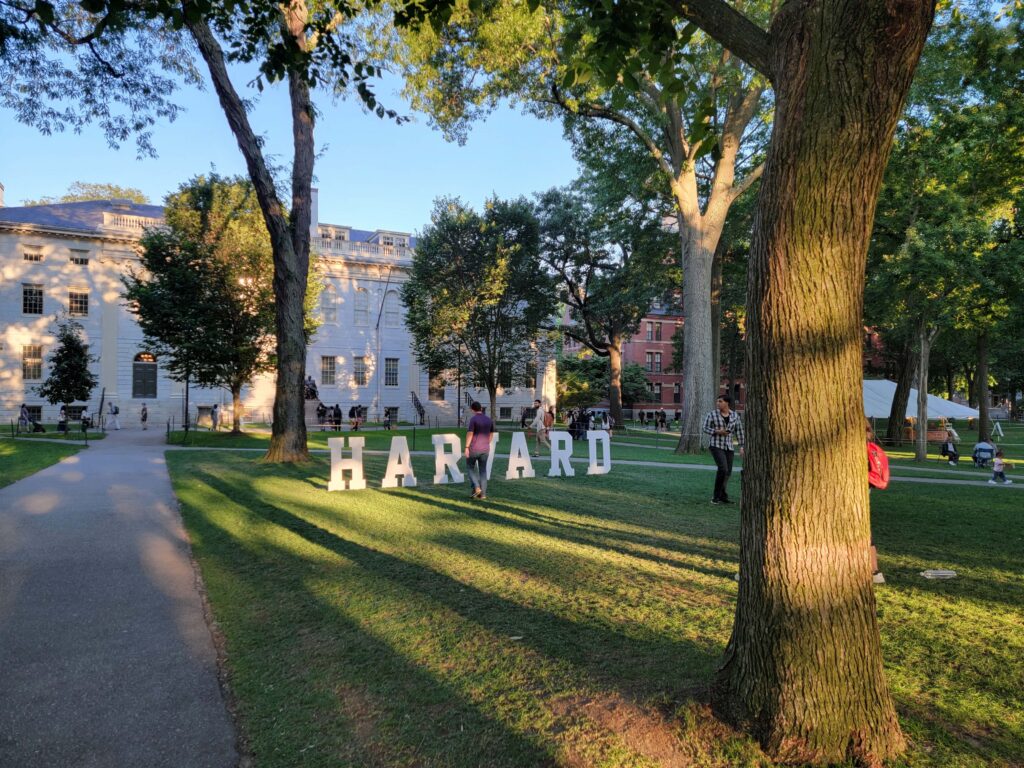
The escalating situation drew a sharp response from Harvard President Alan Garber, who vowed that the university would not “surrender its independence or relinquish its constitutional rights.”
For Nieman, the presidential directive to bar overseas students and scholars from coming to Cambridge jeopardized fellowships for the international journalists selected for the Nieman Class of 2026. Fortunately, the ban was overturned by a judge in time for the 11 international Nieman Fellows to arrive on campus in August. In September, a federal court also restored more than $2 billion in crucial grants to Harvard that the government had frozen.
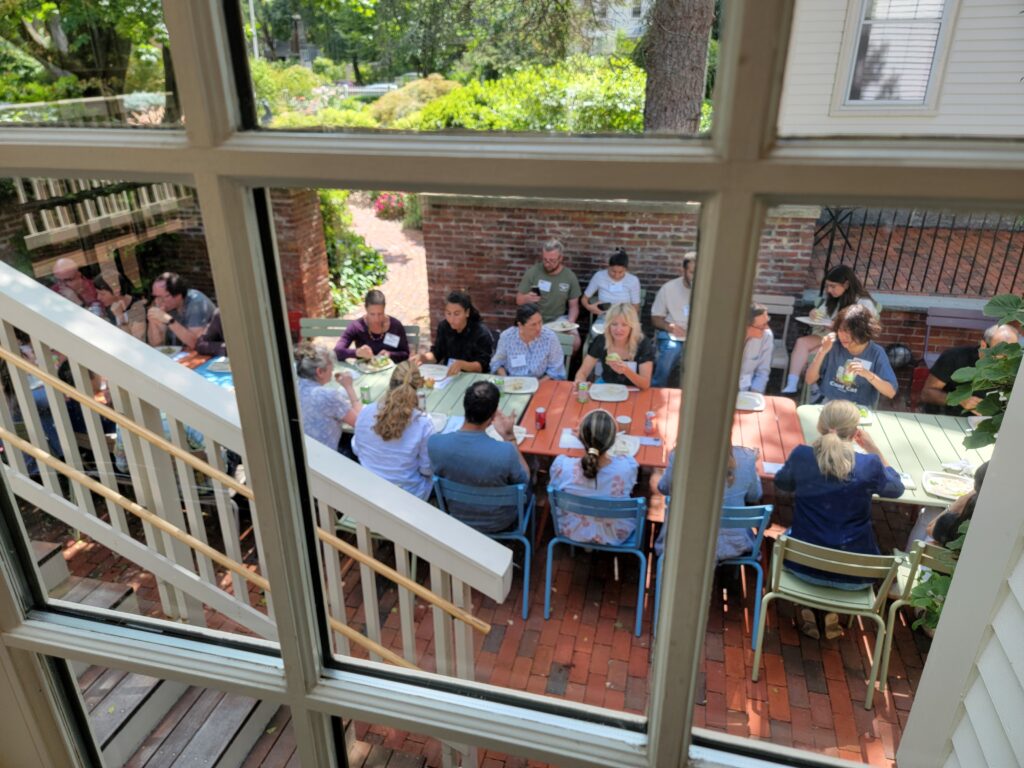
However, a new 8% endowment tax imposed by Congress on universities with large endowment funds — a substantial increase from the current rate of 1.4% — places new strains on both the Nieman Foundation’s and Harvard’s finances.
As for press freedom, the Trump administration has kept up an aggressive assault on the media, denouncing journalists by name, restricting access to federal officials for reporters and photographers from disfavored news organizations, and using “lawfare” to create legal and financial headaches for targeted outlets.
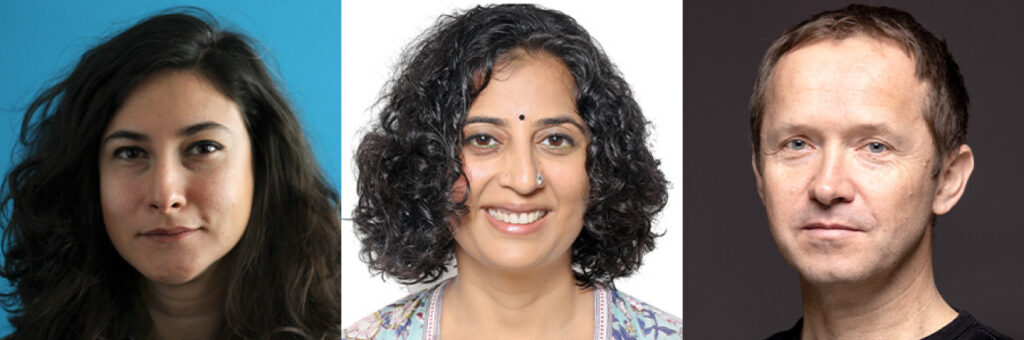
Soon after Trump’s inauguration, Nieman hosted “Defending press freedom in an age of authoritarianism,” an online “Nieman-to-Nieman” event for the global Nieman alumni community. Three journalists from countries where the press has come under attack offered advice to others in similar situations: Gülsin Harman, NF ’20, an Istanbul-based journalist; Vidya Krishnan, NF ’21, an investigative journalist and author based in India; and András Pethő, NF ’20, the co-founder and executive director of Direkt36, an investigative journalism center in Hungary.
The Nieman Foundation continues to advocate for press freedom through its activities, its programming for fellows, and its three publications — Nieman Lab, Nieman Reports, and Nieman Storyboard.
Staff Transitions
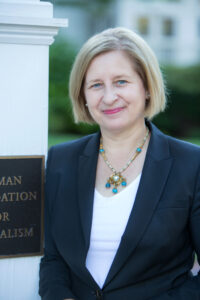
Nieman Foundation Curator Ann Marie Lipinski, NF ’90, stepped down in July after leading the organization for 14 years. During her tenure, Lipinski invited almost 400 journalists from 67 countries to study at Harvard, introduced the Nieman Visiting Fellowship, and collaborated with Harvard’s Berkman Klein Center for Internet & Society to launch the Nieman-Berkman Fellowship in Journalism Innovation.
Over time, she expanded the scope of Nieman’s publications during a period of dramatic disruption in the news industry, focusing reporting on journalism’s greatest threats and opportunities. She oversaw a series of workshops for reporters and editors covering complex issues such as immigration, climate change, housing, and nuclear issues. Nieman also partnered with the University of Chicago Institute of Politics to train journalists covering the 2016, 2020, and 2024 U.S. presidential elections.
In 2016, at the invitation of the Pulitzer Prize Board, Nieman organized a three-day celebration of the centennial of the Pulitzer Prizes — the largest public event ever put on by the foundation. The program, developed by Lipinski and the Nieman staff in conjunction with partners such as the American Repertory Theater, featured dozens of Pulitzer winners in conversation and performances at Harvard’s Sanders Theatre.
“It has been a profound privilege to lead Nieman, not in spite of the industry complexities but because of them,” Lipinski said. “Each year, journalism faced new challenges, and each year, a new class of fellows rose to confront them. Fortifying those journalists for the future is essential. I am grateful to the colleagues who joined me in that work.”
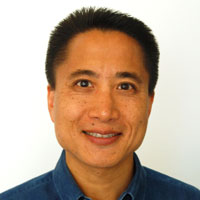
Deputy Curator Henry Chu was named interim curator after Lipinski’s departure. A Harvard graduate and 2015 Nieman Fellow, Chu previously served as a longtime Los Angeles Times correspondent and news editor with postings in Beijing, Rio de Janeiro, New Delhi, and London.
Chu guided the foundation through the months of sustained attacks on Harvard by the Trump administration and welcomed the Nieman Class of 2026 to Lippmann House in August. He has spearheaded new ways to keep alumni connected, launching a “Nieman Nation” LinkedIn group where fellows can connect and collaborate and initiating alumni gatherings in New York and Cambridge, with an aim to expand networking opportunities in other cities.
In October, Chu helped organize a gathering of Washington, D.C.-area alumni with Harvard President Garber at the university’s Dumbarton Oaks museum and research center, and in November, he continued the online Nieman-to-Nieman forums with a session on “AI in the Newsroom: Risks vs. Rewards.” The speakers shared constructive ways to think about generative AI as a reporting tool, while warning of its limitations.
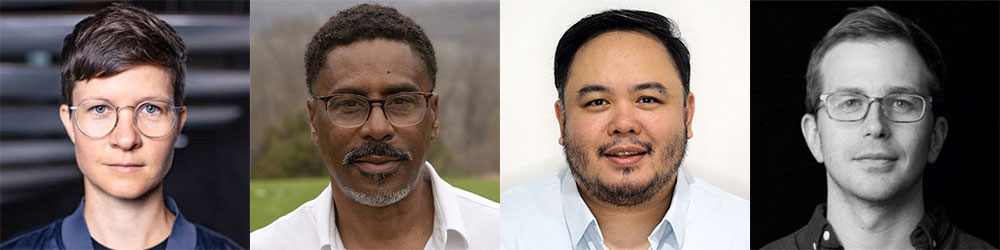
Panelists were:
- Uli Köppen, NF ’19, chief AI officer at Bayerischer Rundfunk in Munich, Germany
- Ron Stodghill, NF ’01, a professor at the Missouri School of Journalism
- Jaemark Tordecilla, NF ’24, a media advisor on generative AI in the Philippines
- Tyler Dukes, NF ’17, McClatchy’s lead editor for AI innovation in journalism (moderator)

In other staff news, Mark Armstrong was named editor of Nieman Storyboard in January. An accomplished writer, producer, and founder of the popular Longreads website, Armstrong introduced the “Nieman Storyboard” podcast to explore the craft of storytelling through in-depth conversations with journalists, authors, podcasters, and filmmakers. He continues to engage the Storyboard audience through weekly newsletters and stories that explore the art of nonfiction storytelling across platforms.
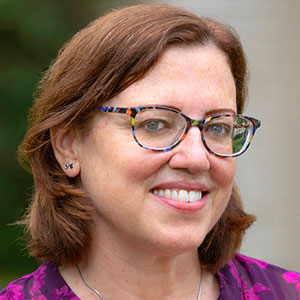
In July, Samantha Henry was named editor of Nieman Reports after serving as interim editor. She previously worked as Nieman’s assistant director for programming and special projects, planning some of Nieman’s largest journalism gatherings and conferences. Henry brings a wealth of experience to the role, including a long reporting career and a graduate degree from the Harvard Kennedy School. She directs an international network of contributing writers and photographers.
Journalism in peril worldwide
Journalism faced daunting challenges beyond the U.S. in 2025, with the Committee to Protect Journalists reporting that 129 journalists and media workers were killed worldwide, the deadliest year on record since CPJ began keeping track more than three decades ago. The grim statistic was the result of ongoing conflicts in Gaza, Sudan, Mexico, and Ukraine, with Palestinian journalists accounting for almost half of the victims.
Journalists also had to continue adapting to rapid changes in the media landscape, including tighter restrictions on press freedom; the erosion of trust in traditional news organizations; the rising popularity of influencers and individual content creators; the consolidation of media ownership; and the growing use, and at times misuse, of generative AI in newsrooms.
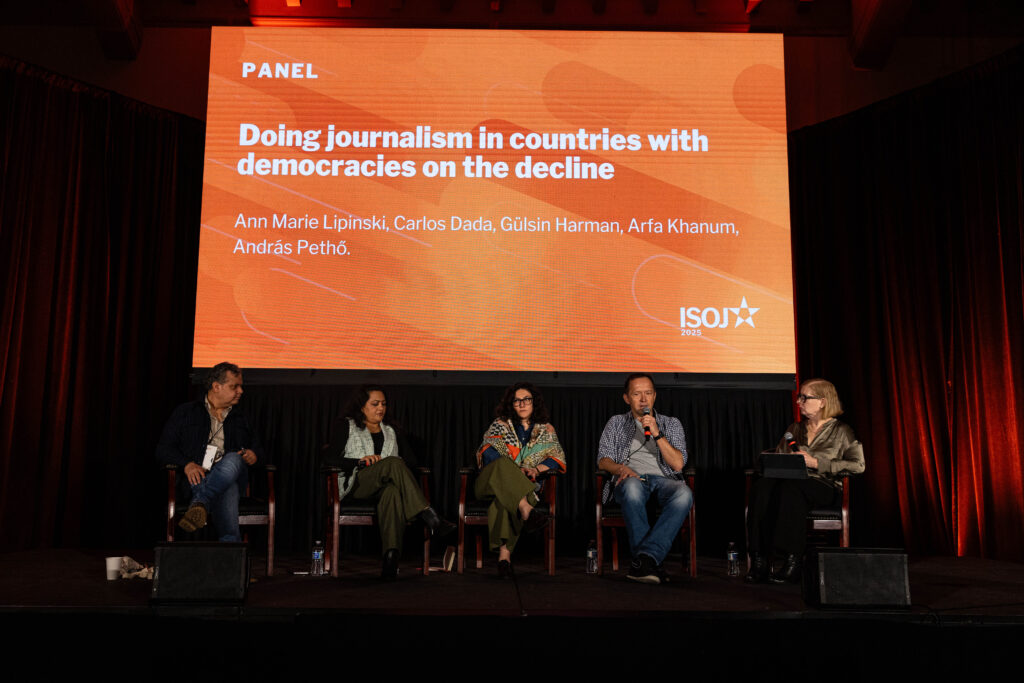
In March, Nieman alumni András Pethő and Gülsin Harman (who had participated in the online Nieman-to-Nieman event on defending press freedom) were two of the speakers who shared their perspectives on “Doing Journalism in Countries with Declining Democracies” at the 2025 International Symposium on Online Journalism in Austin, Texas. Moderated by Nieman Curator Ann Marie Lipinski, the panelists discussed censorship, lawsuits, and other threats to the free press. ISOJ is organized annually by Rosental Alves, NF ’88, founder and director of the Knight Center for Journalism in the Americas at the University of Texas at Austin and a Nieman Advisory Board member.
Throughout the year, the Nieman Foundation continued to monitor the case of two imprisoned Nieman alumni: Dong Yuyu, NF ’07, in China, and Truong Huy San, NF ’13, in Vietnam.
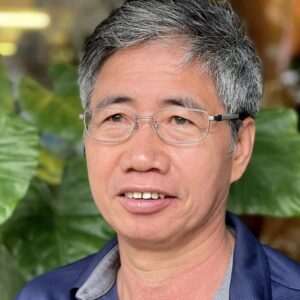
In late February, San was convicted in a Vietnamese court of “abusing democratic freedoms,” the official charge he faced for posting news and commentary critical of government corruption on his popular Facebook account. His two-and-a-half-year sentence, which includes time served since his arrest in June 2024, was widely condemned by the global journalism community. Known widely as Huy Duc, San is one of the country’s leading journalists and author of “The Winning Side,” a book about postwar Vietnam that is banned in the country.
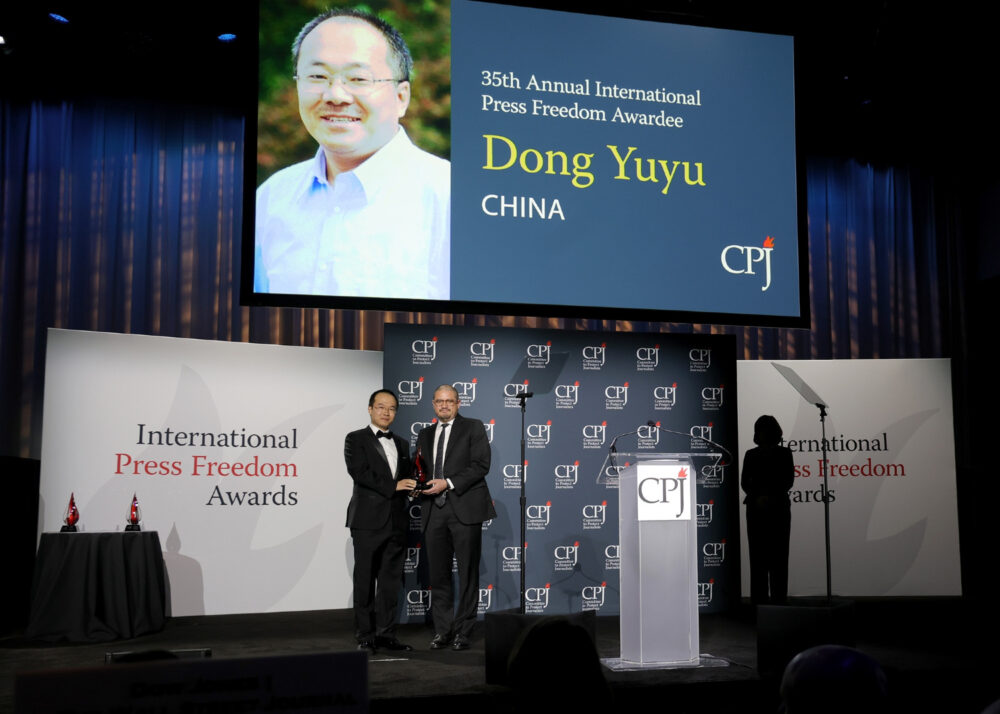
In November, a court in Beijing rejected the legal appeal of Chinese journalist Dong, who was arrested in 2022 while dining with a Japanese diplomat in Beijing. The ruling requires him to serve out his seven-year prison sentence on a bogus espionage conviction. The court’s decision came just days before the Committee to Protect Journalists honored him and his work during its International Press Freedom Awards ceremony in New York. Presented by Juan Arredondo, NF ’19, the award was an important reminder of the global support for Dong and all imprisoned and imperiled journalists.
Cambridge-area alumni gathered at Lippmann House in November for a screening of “Armed Only with a Camera: The Life and Death of Brent Renaud,” followed by a Q&A with Juan Arredondo, the film’s producer and Renaud’s 2019 Nieman classmate, and moderator Rebecca Richman Cohen, a 2022 Visiting Nieman Fellow. The documentary spotlights the courage and dedication Renaud showed throughout his career. He was killed and Arredondo was seriously wounded when they were shot while on assignment in Ukraine in 2022.
In support of quality journalism
In October, Nieman hosted “Arts Criticism: Why It (Still) Matters,” a public discussion that examined how the field has changed and evolved despite newsroom cutbacks. Moderator Mary Louise Schumacher, NF ’17, executive director of The Dorothea and Leo Rabkin Foundation, led a conversation with panelists Jeneé Osterheldt, NF ’17, a culture columnist at The Boston Globe; dance critic Sarah L. Kaufman, NF ’21; and arts critic Siddhartha Mitter. They argued for the relevance of arts journalism today, the need for diverse voices in the field, and what communities miss when arts coverage vanishes. Nieman co-sponsored the event with the Harvard Art Museums and the Carpenter Center for the Visual Arts as part of the university’s ArtsThursdays series of events.
To learn more about the many developments in the world of journalism that we covered in 2025, readers can visit our Publications page and read Nieman Lab, Nieman Reports, and Nieman Storyboard.
Rewarding journalistic excellence
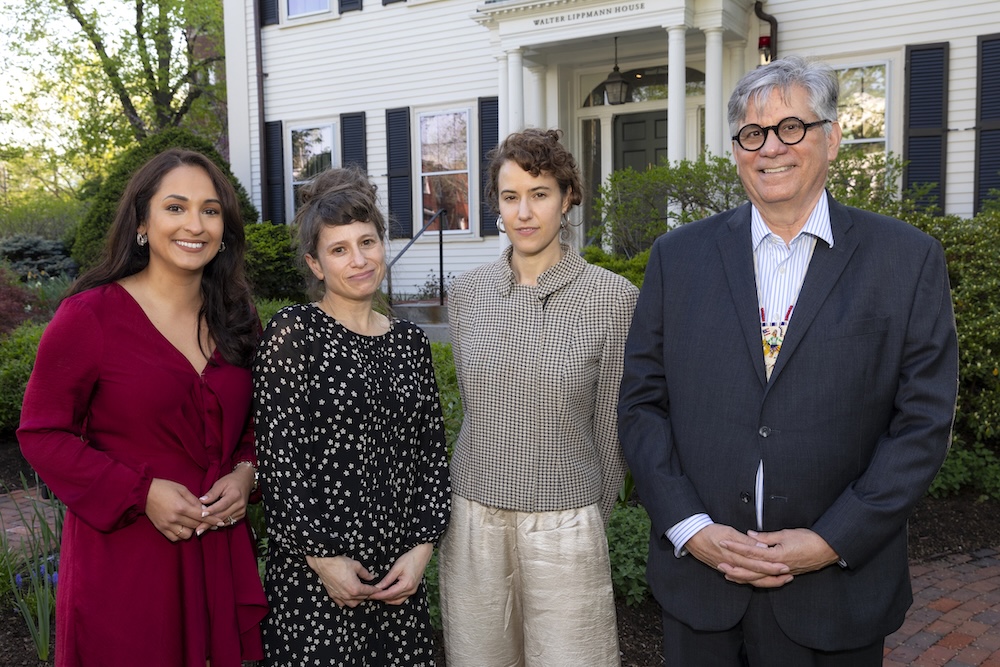
Each year the Nieman Foundation recognizes outstanding reporting and its impact through our journalism awards. At the annual awards ceremony in May, we welcomed winners of the Worth Bingham Prize for Investigative Journalism, Taylor Family Award for Fairness in Journalism, and the I.F. Stone Medal for Journalistic Independence.
In a separate Zoom conversation with Nieman Fellows and staff, Ghousoon Bisharat, Yuval Abraham, and Jonathan Adler from +972 Magazine, the winner of the Louis M. Lyons Award for Conscience and Integrity in Journalism, shared how their team of Palestinian and Israeli journalists have covered the Israel-Hamas war and the harrowing conditions many face while living and reporting in Gaza.
Nieman Curator Ann Marie Lipinski introduced the winners of the J. Anthony Lukas Prize Project Awards in a ceremony at Columbia University in New York. The Lukas Prizes are presented jointly by the Nieman Foundation and the Columbia Journalism School.
Learn more about Nieman’s journalism award winners on our Journalism Awards page.
Training a new generation
In April, Nieman hosted the 21st annual Georges Conference on College Journalism. The gathering heard from keynote speaker Hannah Allam, NF ’09, a ProPublica reporter who covers extremism and national security issues, with a focus on militant movements and counterterrorism efforts, and Jonathan Gaston-Falk, a staff attorney at the Student Press Law Center, who led a workshop on student journalists’ rights. Several Nieman Fellows taught breakout sessions on topics ranging from podcasting to AI, and student journalists shared stories about their news coverage, including threats to international students on their campuses.
Gifts in support of Nieman Fellowships
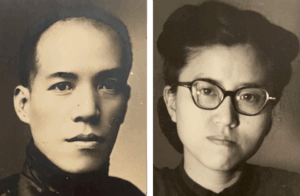
In June, we announced the creation of the Liang-Zhou Nieman Fellowship Fund, established with a generous endowment gift from the Endeavor Foundation. The grant will support journalists selected for the Nieman program who work in or are from China, Taiwan, and Hong Kong. The fund may additionally be used to finance journalism programming and initiatives that support coverage of those areas. The fellowship honors the memory of influential Chinese scholar and journalist Liang Qichao and his granddaughter Zhou Nianci.
The funding was made possible through Ann Bennett Spence, an Endeavor Foundation board member, an author of books on China, and the great-granddaughter and daughter of the fund’s namesakes.
A separate gift from the estate of late Nieman Curator Bob Giles and his wife, Nancy Giles, who designated Nieman as the beneficiary of a charitable remainder trust, was used to fund the fellowships of two of our international fellows.
In memoriam
We remember members of the Nieman family who died in 2025 and their many contributions to journalism.
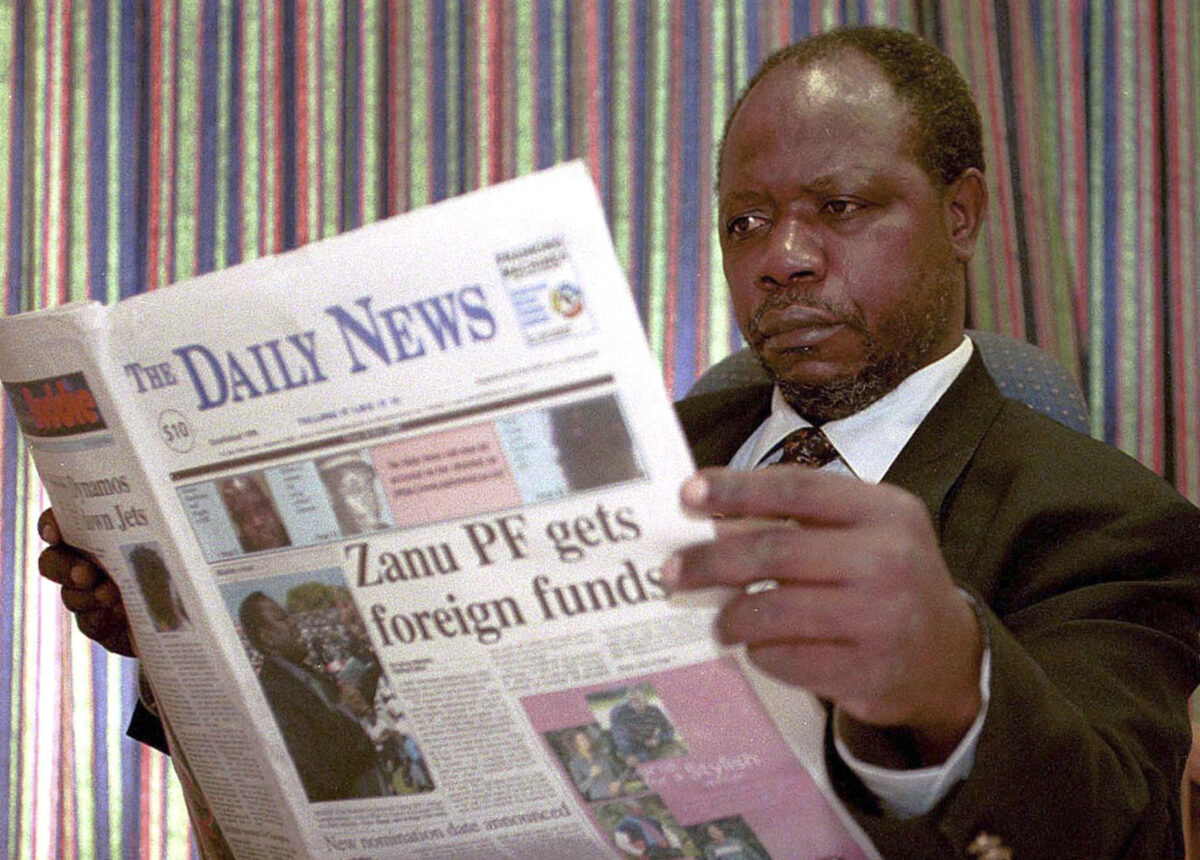
Geoffrey Nyarota, a 2003-2004 Nieman Fellow and courageous champion of press freedom in Zimbabwe, died on March 22. He was 74. His 1989 investigation of the country’s Willowgate scandal revealed corruption involving senior officials in President Robert Mugabe’s administration. Nyarota subsequently lost his job at The Chronicle — the government-run paper where he worked — and spent several years teaching journalism abroad. He returned home in 1999 and founded The Daily News, Zimbabwe’s only independent daily newspaper at the time. Its reporting on corruption and human rights abuses made it the most widely read paper in the country, but it also drew the ire of Mugabe’s government. The paper’s offices were bombed twice, and Nyarota was arrested multiple times and received death threats. By the end of 2002, he was forced out as editor and had to flee for his own safety. He was accepted as a mid-year Nieman Fellow in the class of 2003 and stayed at Harvard for a second semester as a member of the Nieman class of 2004. After moving home, he established a new magazine publishing company in 2011, and in 2013, he led a commission examining the state of the media in Zimbabwe. Obey Martin Manayiti, NF ’20, wrote about Nyarota’s legacy for Nieman Reports.
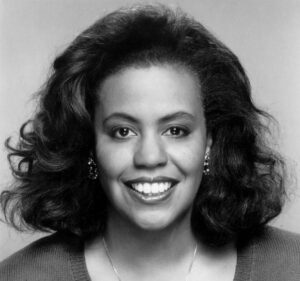
Renee Ferguson, NF ’07, the first Black woman to work as an investigative reporter on television in Chicago, died on June 6. She was 75. Ferguson spent more than 25 years reporting for WMAQ-TV/NBC 5 Chicago and WBBM-Ch. 2 and won numerous awards for her work. She was a longtime member of the Chicago chapter of the National Association of Black Journalists and a William Benton Fellow at the University of Chicago in 1993. Ferguson also served as a spokeswoman for former U.S. Sen. Carol Moseley-Braun and as a press secretary for U.S. Rep. Bobby Rush. In an interview in 2023, she spoke about her journalism career, saying: “When you see something that’s really wrong, when you see a wrong that has been done, you’ve got to say something, you’ve got to do something.”
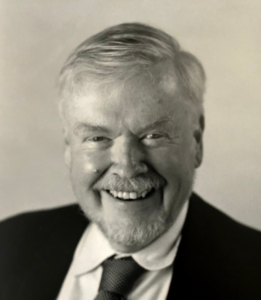
Victor K. McElheny, NF ’63, a science journalist and author who co-founded the Knight Science Journalism Program at MIT, died on July 14 in Lexington, Massachusetts, after a brief illness. He was 89. McElheny covered science and technology for leading publications including The Charlotte Observer, The Boston Globe, Science, and The New York Times and mentored hundreds of journalists around the globe through the MIT fellowship. He reported on a wide range of topics including the Apollo lunar landing program, molecular biology, and the sequencing of the human genome, which he explored in his 2010 book “Drawing the Map of Life.” His other books included profiles of Polaroid founder Edwin Land and molecular biologist and geneticist James Watson.
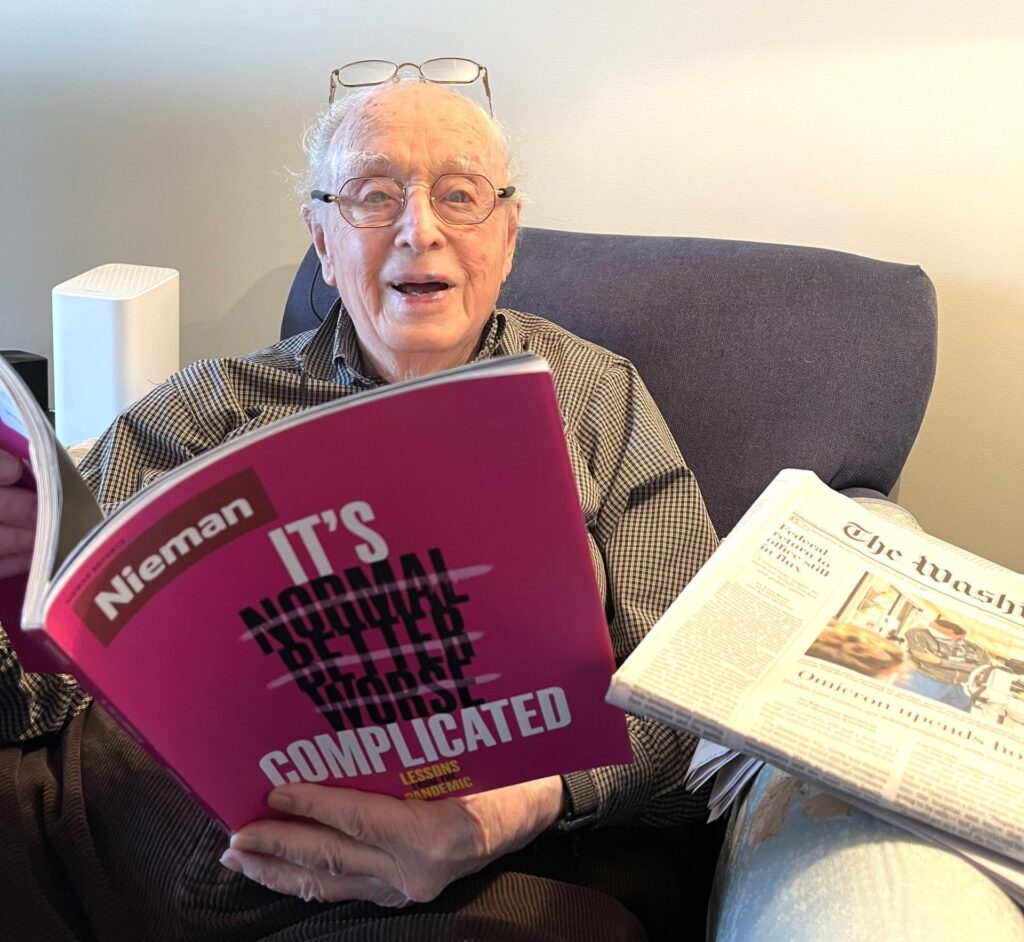
Morton Mintz, NF ’64, an investigative reporter for The Washington Post, died on July 28 at his home in Washington, D.C. He was 103. Mintz reported extensively for the Post on corporate crime and misconduct, with a special focus on the automotive, tobacco, and drug industries. He broke the story about birth defects associated with the sedative thalidomide in 1962 and continued to report on unsafe and ineffective medicines and medical devices, including the harmful Dalkon Shield IUD. During his three decades at the Post, he also covered the Supreme Court, campaign financing, and wasteful Pentagon weapons systems. In addition to his numerous articles for Nieman Reports, Mintz was a senior advisor and frequent contributor to the Nieman Foundation’s Watchdog Project.
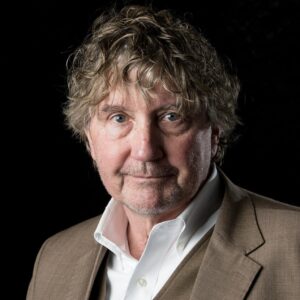
Rod Nordland, NF ’89, a foreign correspondent who reported from more than 150 countries for The New York Times, Newsweek, and The Philadelphia Inquirer, died on June 18 after a lengthy battle with glioblastoma. He was 75. Nordland had written openly about his brain cancer and its impact on his life. He covered wars, conflict zones, and world leaders as well as the human stories behind the news from postings in Bangkok, Beirut, Baghdad, Cairo, Rome, Sarajevo, San Salvador, Islamabad, London, Kabul, and beyond. He was part of the team that won the 1980 Pulitzer Prize in Local Reporting for coverage of the Three Mile Island nuclear accident and was a finalist for the 1983 Pulitzer Prize in International Reporting for his Inquirer coverage of the impact of war and famine on Cambodia, Vietnam, and East Timor.
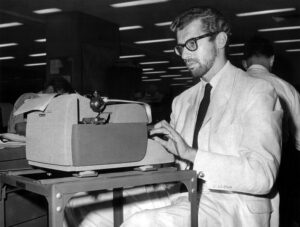
Henry Raymont, NF ’62, a former reporter for United Press International and The New York Times, died on July 15 in Tepoztlán, Mexico. He was 98. While on assignment for UPI in Cuba in April 1961, Raymont was the first to report on the Bay of Pigs invasion. After notifying his editors about the news, Raymont was arrested, imprisoned, and threatened with execution before being freed. Fluent in eight languages, Raymont worked for UPI for more than a decade, including as diplomatic correspondent for Latin America. He later was a New York Times correspondent based in Buenos Aires and New York, where he covered the publishing industry. He also wrote for the Brazilian publication Jornal do Brasil and taught at universities in Washington, Jerusalem, and Berlin.
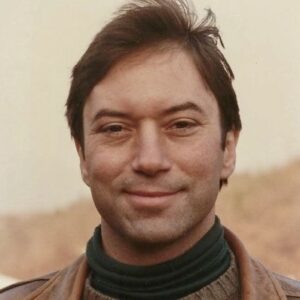
Karl Schoenberger, NF ’95, a journalist, writer, and author, died on April 8 in El Cerrito, California, following complications from a stroke. He was 71. During his 25-year journalism career, Schoenberger worked in Tokyo for the Los Angeles Times, The Asian Wall Street Journal, and The Associated Press, and in the U.S. for the Hartford Courant and the San Jose Mercury News/Knight Ridder. He covered Asia as a roving Pacific Rim reporter for the Los Angeles Times, based in California, and worked for two years at Fortune magazine in Hong Kong following his Nieman Fellowship. He reported on topics ranging from the Tiananmen Square protests to the Japanese economy.
Nieman Programming
Throughout the academic year, the Nieman Foundation invites guests from a variety of fields and backgrounds to participate in Nieman seminars and workshops. The speakers share their research, expertise, and insights on topics ranging from journalism and the AI revolution to politics, history, and the arts. The Nieman Fellows also organize more informal gatherings known as DIYs. Fellows in the classes of 2025 and 2026 took turns moderating and hosting many of the events.
Seminars
Spring 2025
David McGraw, senior vice president and deputy general counsel for The New York Times Company and a lecturer at Harvard Law School, launched the spring semester seminar series. In conversation with David Herszenhorn, NF ’25, the Russia, Ukraine, East Europe editor at The Washington Post, McGraw warned that scrutiny and skepticism of the press will likely increase under the new Trump administration, along with more libel suits and leak investigations. McGraw is the author of “Truth in Our Times: Inside the Fight for Press Freedom in the Age of Alternative Facts.”
Raney Aronson-Rath, editor-in-chief and executive producer of PBS’ “Frontline,” spoke with moderator Robert Libetti, NF ’25, most recently executive producer for video investigations and documentaries at The Wall Street Journal, about newsroom adaptation and audience trust, two topics the 2025 Nieman Fellows during their fellowship year.
Elizabeth Hansen Shapiro, the outgoing CEO and co-founder of the National Trust for Local News, a nonprofit newspaper company dedicated to protecting local news, spoke with moderator Darcel Rockett, NF ’25, a senior journalist at the Chicago Tribune. The Trust’s mission is to reconnect people to the places where they live through sustainable community newspapers.
Deb Roy, director of the MIT Center for Constructive Communication, an initiative to design human-machine systems that improve communication across divides, and Dimitra Dimitrakopoulou, head of the center’s translational research, shared their latest findings with the fellows and moderator Nilesh Christopher, NF ’25, an India-based technology reporter.
Gina Chua, executive editor of Semafor, talked with Albee Zhang, NF ’25, a correspondent for Reuters in China, about Semafor’s approach to news coverage, which segments its reports into facts, analysis, counterarguments and global perspectives.
Nieman Advisory Board members Wendi C. Thomas, NF ’16, founding editor of MLK50: Justice Through Journalism in Memphis, Tennessee, and David Skok, NF ’12, founder of The Logic, one of Canada’s leading sources of business and technology news, spoke to fellows about how they launched their independent newsrooms.
Dick Tofel, the founding general manager and former president of ProPublica and principal of the journalism consultancy Gallatin Advisory LLC, spoke with moderator Jesselyn Cook, NF ’25, a journalist who has covered the intersection of technology and democracy. He stressed the need for journalists to unite to fight attacks on the press, stay relevant by offering audiences value, and show transparency in reporting.
Joy Mayer, founder of Trusting News, spoke with moderator Ryan Kellett, former vice president of audience at Axios Media and a 2025 Nieman-Berkman Klein Fellow in Journalism Innovation, about how newsrooms can build trust with readers through transparency and audience engagement. Excerpts from the talk can be found in Nieman Reports.
Celeste LeCompte, NF ’15, and Jay Barchas-Lichtenstein from The Center for News, Technology and Innovation spoke with moderator Marcus Yam, NF ’25, a foreign correspondent and photojournalist for the Los Angeles Times, about their research on public perceptions of journalism and the news, as well as journalists’ opinions about their own work.
Jill Lepore, Harvard professor of American history, author, and New Yorker staff writer, joined Nieman Curator Ann Marie Lipinski to offer historical context and observations on President Trump’s first 100 days in office as well as the family history that helped shape Elon Musk’s worldview. Lepore created the eight-part BBC/Pushkin Industries podcast series “X Man: The Elon Musk Origin Story.”
Hannah Allam, NF ’09, a national security reporter for ProPublica who focuses on militant movements and counterterrorism efforts, spoke with moderator Sandrine Rigaud, NF’25, former editor-in-chief of Forbidden Stories, about covering conflicts overseas and reporting on extremism and domestic terrorism in the U.S.
Isaac Saul, founder of Tangle, an online newsletter that aims to give nonpartisan coverage of current events, joined the fellows for a conversation moderated by 2025 Nieman-Berkman Klein Fellow Ben Reininga. Saul discussed his search for a new way of reporting and what he has learned about how people consume political news.
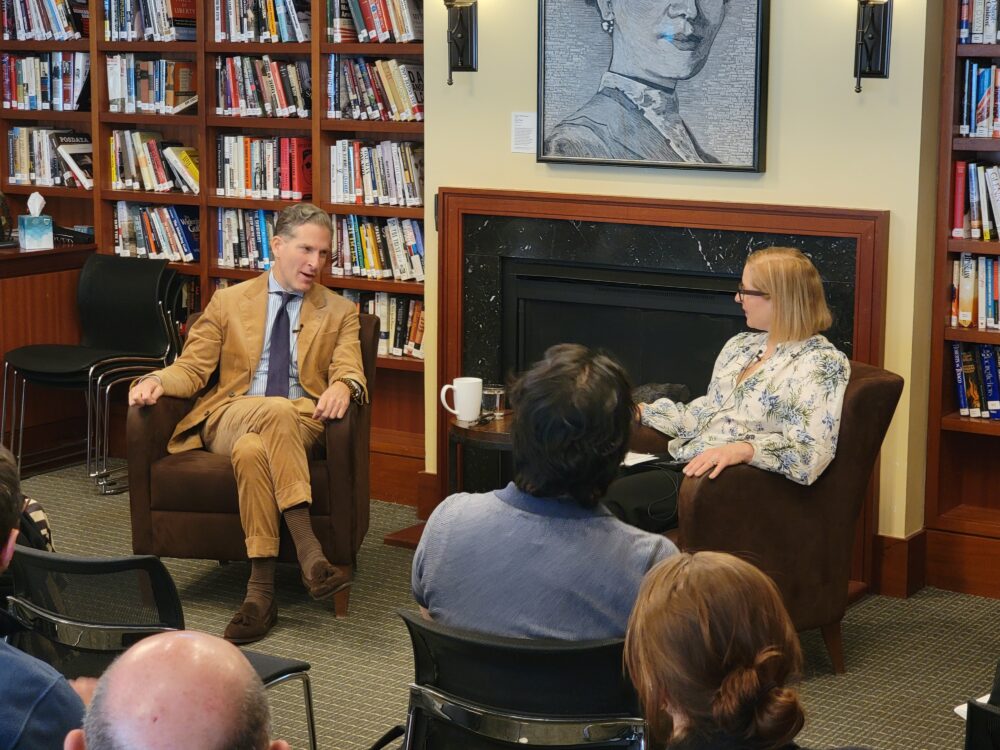
Harvard Law School Professor and Bloomberg opinion columnist Noah Feldman spoke with Nieman Curator Ann Marie Lipinski and the 2025 Nieman Fellows about the legal issues surrounding the showdown between the Trump administration and Harvard University. In a Bloomberg video, Feldman explained the legal arguments Harvard needs to make to fight federal funding cuts.
Fall 2025
Harvard Kennedy School Professor Archon Fung, director of the Ash Center for Democratic Governance and Innovation, joined Nieman Interim Curator Henry Chu to kick off Nieman’s fall seminar series. He discussed how polarization continues to divide families, communities, and the nation, and why it’s vital that Harvard continues to fight for its academic freedom.
Melissa Bell, CEO of Chicago Public Media and co-founder of Vox, joined John Hammontree, NF ’26, executive producer of podcasting for the Alabama Media Group, to discuss her work, the importance of local newsrooms that serve their communities, and the career path that led to her position leading one of the largest local public media institutions in the U.S.
Joy Mayer, founder and director of Trusting News, returned to the Nieman Foundation for discussion with moderator Silvia Foster Frau, NF ’26, a national investigative reporter covering immigration for The Washington Post. They discussed how newsrooms can increase audience trust in their work through transparency, ethical reporting, and greater audience engagement.
Julie Pace, executive editor and senior vice president at The Associated Press, spoke with Suha Halifa,NF ’26, the senior editor of The Times of Israel Arabic, about the AP’s global news operation and the growing reliance on video and multimedia reporting to serve audiences.
Gina Chua, the newly appointed executive director of the Tow-Knight Center for Journalism Futures at the Craig Newmark Graduate School of Journalism at CUNY and executive editor at large for Semafor, returned to Nieman in the fall to speak with Daniel Drepper, NF ’26, who most recently served as head of investigative cooperation among the Süddeutsche Zeitung newspaper and the German public broadcasters NDR and WDR, about her work, including AI innovation in journalism.
Documentary film director Errol Morris spoke with moderator Shany Littman, NF ’26, magazine and feature writer for the Israeli newspaper Haaretz, about his work and the role of documentaries in bearing witness to people and events.
To wrap up the fall semester in early December, Martha Minow, former dean of Harvard Law School and recent chair of the MacArthur Foundation, joined Lisa Hagen, NF ’26, a national reporter for NPR who covers the mainstreaming of radical views, for a wide-ranging discussion about the forces shaping the U.S. Supreme Court, democracy, higher education, and journalism.
Nieman DIYs
DIYs — informal talks, trainings, and other events arranged and hosted by the Nieman Fellows — covered many different topics during the past year.
The Class of 2025
Paris-based investigative journalist Mark Lee Hunter, co-founder of Story-Based Inquiry Associates and The Stakeholder Media Project, spoke with Lina Chawaf, NF ’25, CEO of the independent Syrian media network Radio Rozana.
Matt Kielty, a senior producer at Radiolab, discussed his work with Bianca Giaever, NF ’25, an independent radio journalist and filmmaker.
Jakob Moll, NF ’22, co-founder and international director at the member-backed news site Zetland in Copenhagen, joined Line Vaaben, NF ’25, an editor and immersive journalist at the Danish daily Politiken, for a Zoom conversation about building a news organization from the ground up.
Melanie Amann, co-editor-in-chief of Der Spiegel, joined Benjamin Bidder, NF ’25, an economics and business reporter for the news magazine, for a discussion about the German elections, the emergence of the far-right AfD party, and how Trump administration policies affect transatlantic partnerships.
Bidder also hosted Mónica Guzmán, NF ’16, host of the podcast “A Braver Way” and Senior Fellow for Public Practice at Braver Angels, a nonprofit working to depolarize America, for a conversation on how to respond to disagreement with curiosity, bridge ideological divides, and build audience trust in media organizations.
Bidder additionally arranged a trip to MIT to meet with economist and Nobel laureate Daron Acemoglu to discuss AI and Big Tech and how they should be regulated. And he led a conversation with Julia Minson, a Harvard Kennedy School associate professor who discussed her research on the psychology of disagreement.
Sarah Childress, a senior editor at ProPublica, spoke with Mike Shum, NF ’25, a filmmaker director and producer, about investigative journalism tools and strategies for reporting. Childress, a former deputy investigative editor at The Washington Post and senior editor at PBS’ “Frontline,” is a lecturer at MIT’s Graduate Program in Science Writing.
Johanna Wild, a 2024 Nieman-Berkman Klein Fellow in Journalism Innovation and an open-source researcher at Bellingcat, led a Zoom tutorial about using open-source tools for reporting, including Bellingcat’s Online Investigations Toolkit. The session was hosted by Robert Libetti, NF ’25, most recently executive producer for video investigations at The Wall Street Journal
Hong Qu, a 2013 Visiting Nieman Fellow and adjunct lecturer at Harvard Kennedy School, was invited by Albee Zhang, NF ’25, a correspondent for Reuters in China, to lead a workshop on data visualization tools for storytelling.
Juanita León, NF ’07, founder and director of the political news website La Silla Vacía in Colombia, joined journalist Diana Durán Nuñez, NF ’25, online to discuss journalism in a time of political polarization. As reported by Nieman Lab, funding cuts by USAID and Meta’s fact-checking program will affect León’s newsroom and others like it.
David Bloss, who worked as a regional editor for the Organized Crime and Corruption Project in the Caucasus, an editor at the Cambodia Daily, and a journalism trainer in Georgia, Indonesia, and India, met with moderator Lasha Kveseladze, NF ’25, an investigative journalist from Tbilisi, Georgia, to discuss The Panama Papers and other collaborative investigations.
Ann M. Simmons, NF ’03, a Spring 2025 Resident Fellow at Harvard Kennedy School’s Institute of Politics and former Moscow bureau chief for The Wall Street Journal, spoke with Marcus Yam, NF ’25, a foreign correspondent and photojournalist for the Los Angeles Times, about her work and understanding Russia under Vladimir Putin.
Siobhán O’Grady, Ukraine bureau chief at The Washington Post, spoke with David Herszenhorn, NF ’25, the Russia, Ukraine, East Europe editor at the Post, about reporting in the region.
Herszenhorn also moderated a talk with Sewell Chan, who has held senior editing roles at the Columbia Journalism Review, The Texas Tribune, the Los Angeles Times, and The New York Times. They discussed the state of journalism and prospects for the news industry.
Gary Knight, NF ’10, CEO of The VII Foundation, joined Marcus Yam, NF ’25, foreign correspondent and photojournalist at the Los Angeles Times, to screen and discuss the making of “The Stringer.” The documentary presents evidence asserting that stringer Nguyen Thanh Nghe, rather than AP photographer Nick Ut, took the iconic Pulitzer Prize-winning photo known as “Napalm Girl” during the Vietnam War. Knight co-produced the film.
Kyrylo Beskorovainyi, NF ’25, co-founder and publisher of the Ukrainian popular science media company Kunsht, spoke to his classmates about reporting on science. In 2022, he co-founded Science at Risk, an initiative to help scientists and institutions cope with challenges during the war in Ukraine. At Harvard, he studied how to sustain and improve science reporting and counter disinformation during times of war and social crisis.
In April, Beskorovainyi also arranged a trip for the fellows to the MIT Nuclear Reactor Laboratory.
The Class of 2026
Angie Drobnic Holan, NF ’23, director of the International Fact-Checking Network, and Susanna Siegel, a Harvard philosophy professorwho teaches the course “Truth, Lies, and the Press,” joined Nieman Interim Curator Henry Chu to discuss their work.
Jonathan Cohn, author of The Bulwark’s U.S. government and policy newsletter The Breakdown, spoke with Daniel Strauss, NF ’26, a former national political reporter for CNN, about how reporting on policy has changed in the past 25 years. A former president of The Harvard Crimson, Cohn specializes in healthcare coverage.
Strauss also invited Clare Malone, a staff writer at The New Yorker who covers the media business, journalism, and politics, to speak with fellows online. He additionally hosted a talk with Susan Glasser, staff writer at The New Yorker, and Peter Baker, chief White House correspondent for The New York Times, who discussed their reporting on the impact of the Trump administration on national and global affairs.
Melanie Amann, most recently deputy editor-in-chief of Der Spiegel and a fellow at Harvard’s Minda de Gunzburg Center for European Studies, returned to speak with Daniel Drepper, NF’26, who served as head of investigative cooperation among the Süddeutsche Zeitung newspaper and the German public broadcasters NDR and WDR. They discussed covering German politics, the growth of the far-right AfD party, U.S.-Europe relations, and other topics.
Jane Perlez, former New York Times Beijing bureau chief, a fellow at Harvard Kennedy School’s Belfer Center for Science and International Affairs, and host of the podcast “Face-Off: The U.S. vs. China,” along with producers Frank Zhou and Nina Porzucki, discussed their work with John Hammontree, NF ’26, executive producer of podcasting for the Alabama Media Group.
Dr. Lindsey Burghardt, chief science officer at Harvard’s Center on the Developing Child, met with Irene Caselli, NF ’26, an Italian journalist who focuses on early childhood and leads the Early Childhood Journalism Initiative at the Global Center for Journalism and Trauma, to discuss the factors that influence how our brains develop.
Workshops, Trainings, and Trips
The 2025 fellows began the winter semester with a training session on trauma, stress, and self-care in journalism taught by Dr. Kate Porterfield, a consulting psychologist at the Bellevue Hospital Program for Survivors of Torture. She has worked extensively with journalists, attorneys, and human rights organizations on recognizing and managing secondary traumatic stress.
Sheila Heen, the Thaddeus R. Beal Professor of Practice at Harvard Law School and deputy director of the Harvard Negotiation Project, led an interactive workshop for the fellows on navigating challenging conversations.
Brian Mandell, vice chair for executive education for the Program on Negotiation at Harvard Law School and the faculty chair of the Negotiation and Conflict Resolution Collaboratory at Harvard Kennedy School, taught a daylong session on negotiation strategies.
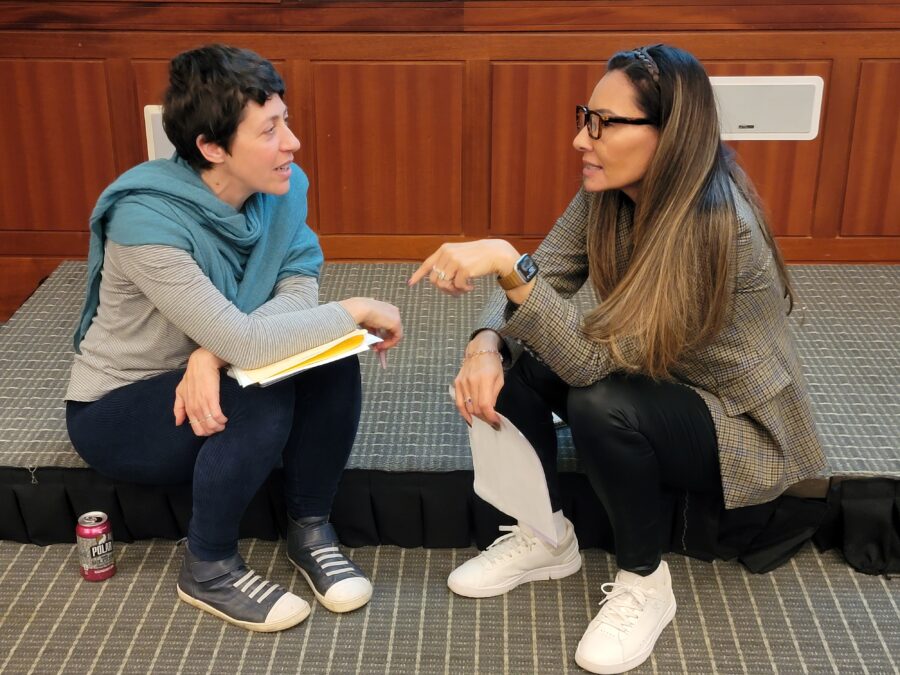
Throughout the year, fellows visited nearby research centers, cultural attractions, and museums including the MIT Media Lab, Harvard’s Arnold Arboretum, the Harvard Art Museums, and the American Repertory Theater, where they attended a performance of “Passengers” and heard from Ryan McKittrick, the director of artistic programs and dramaturg at the A.R.T., and Diane Paulus the artistic director of the A.R.T.