
Juan Pablo Barrientos
Juan Pablo Barrientos is the investigations editor at CasaMacondo, a Colombian digital news outlet he co-founded in 2023. His reporting focuses on sexual abuse, land dispossession, corruption, and abuses of power. He previously worked for the Colombian news organizations W Radio, Caracol Radio, and Vorágine, served as director of the television news program Teleantioquia Noticias, and was a Washington correspondent for La Fm and Noticias RCN. Barrientos has taught journalism at five Colombian universities and is a three-time winner of the Simón Bolívar National Journalism Award (2018, 2020, 2022), the 2023 Reporters Without Borders Press Freedom Award, and a finalist in the 2026 inaugural Stringer Awards. He secured four Constitutional Court rulings in Colombia establishing legal precedents for journalists’ access to information.
Barrientos is studying access-to-information laws in the Americas, focusing on countries where such laws do not exist or have been rolled back, including the United States, El Salvador, Venezuela, Nicaragua, and Cuba.
Bluesky: @jpbarrientosh.bsky.social
X: @jpbarrientosh
Instagram: @jpbarrientosh
Threads: @jpbarrientosh
Links: (articles are in Spanish)
- The Secret Archive: Priests Denounced for Child Sexual Abuse in Colombia
- Books by Juan Pablo Barrientos about sexual abuse by priests in the Catholic Church: “Dejad que los niños vengan a mí,” “Este es el cordero de Dios,” and “El archivo secreto”
- Orphaned Justice: The Denied Son of the President of the Constitutional Court
- Monopolitica: The real estate dealings of Colombian presidents and vice presidents with drug traffickers, scammers, mobsters, corrupt, and environmental predators.
Amber Bracken
Amber Bracken is a Canadian photojournalist whose photographs and writing appear in National Geographic, The Globe and Mail, The New York Times, The Narwhal, and The Wall Street Journal. She reports on a broad range of issues, often exploring intersections of race, environment, culture, and colonization. Bracken is a double World Press Photo winner, recognized in 2017 and in 2022, when she won Photo of the Year. Her other honors include the Canadian Association of Journalists’ 2020 Charles Bury Award for contributions to coverage of Indigenous stories, the International Center of Photography’s 2018 Infinity Award, and the Pen Canada Ken Filkow Prize for advancing freedom of expression.
Bracken is studying the long-term impact of colonization on the identities of both the colonizers and the colonized, including concepts of race, cultural alienation, and relationship to the land.
Personal website
Bluesky: @amberbracken.bsky.social
Instagram: @photobracken
LinkedIn
Links:
Graham Lee Brewer
Graham Lee Brewer most recently worked as a national writer for The Associated Press on its Race and Ethnicity team, focusing on Indigenous communities and tribal nations. A citizen of the Cherokee Nation, he is based in Oklahoma. During his time as president of the Indigenous Journalists Association, he advocated for the rights of Indigenous journalists both in the U.S. and globally. Prior to joining the AP, he worked as a national investigative reporter for NBC News, where he built the news organization’s first Indigenous affairs beat and won the 2023 Richard LaCourse Award for Investigative Journalism. His work has appeared in The New York Times, ProPublica, The Guardian, and Rolling Stone, and on NPR.
Brewer is studying the impact of imperialism on Indigenous storytelling and recordkeeping and the ways U.S. newsrooms fail to understand and report on tribal governments, their autonomy, and their self-determination.
Bluesky: @grahambrewer.bsky.social
X: @grahambrewer
LinkedIn
Links:
- Cuts to USAID severed longstanding American support for Indigenous people around the world
- America’s Biggest Museums Fail to Return Native American Human Remains
- Leonard Peltier remains defiant in AP interview, maintaining innocence and vowing continued activism
- Tribal college leaders are uneasy about US financial commitments despite a funding increase
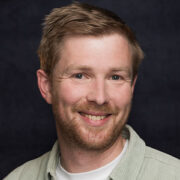
George Butler
George Butler is a British illustrator who documents the impact of war and humanitarian crises across the globe. Butler’s work has been regularly funded by the Pulitzer Center and his drawings have been published by The Times of London, Monocle, The New York Times, The Guardian, the BBC, CNN, Der Spiegel, Germany’s ARD television, and NPR. His illustrations from Syria and Ukraine are held in the Victoria and Albert Museum as part of the U.K.’s National Archives. He is the author of two books: “Ukraine: Remember Also Me – Testimonies From the War” and “Drawn Across Borders: True Stories of Migration.” His “Drawn to War” report won a 2023 American Society of Magazine Editors Award for Best Illustrated Story. In 2014, he co-founded Action Syria, a U.K.-based NGO that has raised more than £9 million for Syrian health and education organizations.
Butler is exploring the lessons journalists can learn from traditional drawn reportage to better serve audiences grappling with complex stories in the era of generative AI.
Personal website
X: @george_butler
LinkedIn
Instagram: @georgebutlerillustration
Links:
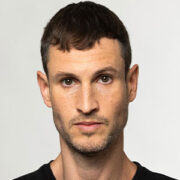
Hilo Glazer
Hilo Glazer is a writer for Haaretz Magazine in Israel. He began his career at Ma’ariv for Youth, an Israeli weekly magazine for teenagers, and later reported on sports and culture and served as deputy editor of the weekly paper Ha’ir in Tel Aviv before joining Haaretz in 2013. Glazer’s work spans a wide range of subjects, including investigations into public corruption, healthcare systems, and the security sector, as well as political profiles and reports on sexual assault. His work reveals hidden social and political processes and gives voice to marginalized communities. Glazer’s writing also explores the complex facets of the LGBTQ+ community.
Glazer is examining democratic backsliding in a global context, focusing on its institutional dimension, and using that knowledge to develop new approaches for investigative journalism.
X: @hiloglazer
Instagram: @hilog
Facebook
Links:
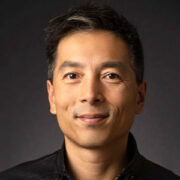
Justin Jin
Justin Jin is a photographer, writer, and National Geographic Explorer based in Brussels and Shanghai. After beginning his career as a Reuters correspondent, he built an independent practice combining photography and writing to report on the forces reshaping societies. His work has taken him from documenting China’s rise and Europe’s green transition to covering innovation at the frontiers of scientific research. Jin’s reporting appears regularly in National Geographic, GEO, and other international publications, and has received recognition including Pictures of the Year International and the Hansel-Mieth Prize, both for his writing and photography.
Jin is looking at philosophy and political science, which he studied at university, through the lens of three decades in the field, aiming to answer the recurring question in his work: What is the essential truth here?
Instagram: @justin.jin
LinkedIn
Links:

Benji Jones
Benji Jones is a senior correspondent at Vox, where he covers environmental issues including biodiversity, climate change, and natural disasters. He is particularly interested in the human impacts of ecosystem collapse and has reported from around the world to tell those stories. Prior to Vox, Jones covered energy at Business Insider, where his reporting exposed fraud in the solar industry and how Covid-19 upended oil companies. Jones spent the first part of his career as a researcher. He was on the founding team of Global Forest Watch, a forest-monitoring platform, and started a Ph.D. program in biology at Stanford before becoming a journalist.
Jones is studying how people relate to and value the natural world, in order to strengthen journalism about the global biodiversity crisis.
Personal website
Bluesky: @benjij.bsky.social
X: @BenjiSJones
Instagram: @benji_s_jones
LinkedIn
Links:
- I asked a billionaire about his environmental philanthropy. It didn’t go well.
- The strange reason why wildlife agencies want Americans to buy more guns
- An exclusive look inside the largest effort ever mounted to keep the Great Barrier Reef alive
- Most animals on this island nation are found nowhere else on Earth. And now they’re vanishing.
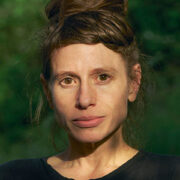
Stacy Kranitz
Stacy Kranitz is a visual journalist based in Tennessee, where she focuses on economic inequality in Appalachia. She regularly works on assignment for The New York Times Magazine, Harper’s, Le Monde, and The Atlantic. Her photographs are in public collections, including the National Gallery of Art, the Harvard Art Museums, and the Museum of Fine Art, Houston. In 2025, she and her colleagues received the Pulitzer Prize in Public Service for their reporting on post-Roe America for ProPublica. She is also the recipient of a Guggenheim Fellowship. Her first monograph, “As It Was Give(n) to Me,” was published in 2022. Her latest book, “Ain’t No Grave Gonna Hold My Body Down,” was awarded a 2025/2026 Images Vevey Book Award.
Kranitz is studying the role of photography in shaping public narratives and policy debates about poverty.
Instagram: @stacykranitz
Bluesky: @stacykranitz.bsky.social
LinkedIn
Links:
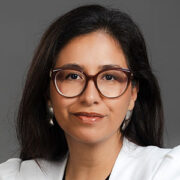
Romina Mella
Romina Mella is a managing editor of the Peruvian investigative media outlet IDL-Reporteros. She specializes in covering political and corporate corruption, abuses of power, justice, and disinformation. She has led collaborative investigations and participated in landmark projects including the Panama Papers and the Pandora Papers. Her work has received the Global Shining Light Award and the Latin American Investigative Journalism Award, among other honors. In 2017, she was a fellow in the Tow-Knight Entrepreneurial Journalism Program at the CUNY Graduate School of Journalism. She is a member of the International Consortium of Investigative Journalists.
Mella is studying the impact of disinformation strategies and violent discourse used by special-interest groups to delegitimize investigative journalism and undermine democracy.
X: @romina_mella
Instagram: @romina_mella_pardo
LinkedIn
Links: (articles are in Spanish)
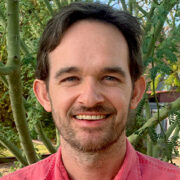
Rowan Moore Gerety
Rowan Moore Gerety is an independent journalist who reports on the intersection of science, law, and society, from the challenge of financing coral restoration work at scale to the political economy of conservation projects in Madagascar and misinformation around the spread of cholera. He is the author of “Go Tell the Crocodiles: Chasing Prosperity in Mozambique,” and is a contributor to The New York Times Magazine, Wired, and The Atlantic. He edited the podcast “Bright Lit Place,” a narrative history of Everglades restoration, and his reporting on the plight of pregnant women in Texas jails was nominated for a Peabody Award.
Moore Gerety is examining the evolving use of animals in medical research, with new advances allowing the study of adaptations and genes across the animal kingdom.
Links:
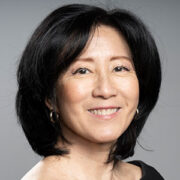
Ellen Nakashima
Ellen Nakashima is a reporter for The Washington Post covering intelligence and other national security matters. She has recently reported about the U.S. and Israel’s war with Iran, the Pentagon’s series of lethal boat strikes in the Caribbean, and turmoil in the intelligence community. Over three decades with the Post, she has also written about cyber operations, foreign influence operations, and the impact of China’s rise on national security, and was a correspondent based in Jakarta. Nakashima has been a member of three Post teams that have won Pulitzer Prizes, for coverage of the January 6 attacks on the U.S. Capitol, an investigation of Russian efforts to influence the 2016 election, and reporting on the hidden scope of the National Security Agency’s surveillance programs.
Nakashima is studying the impact of emerging technologies on U.S. national security and the ability of the U.S. to compete with China in this area.
Bluesky: @ellenwapo.bsky.social
X: @nakashimae
Instagram: @ellen.nak
LinkedIn
Links:

Isabelle Niu
Isabelle Niu is a video journalist at The New York Times who covers the internet as a place and documents how individual lives are shaped by state power. Her storytelling spans topics ranging from online scam networks and Chinese state surveillance to emerging digital trends, including microdramas and the rise of AI-generated misinformation. Her investigation into Southeast Asian scam operations has informed U.N. cybercrime investigations and U.S. Congressional proceedings.Her work has received multiple awards from organizations including the Overseas Press Club, the Society of Publishers in Asia, and Pictures of the Year International.
Niu is studying how displacement and migration shape communities across borders, and how journalists’ own backgrounds bear on their reporting.
Links:
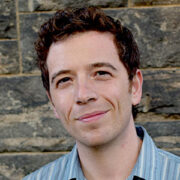
Jake Offenhartz
Jake Offenhartz is a New York-based reporter covering national law enforcement for The Associated Press. His work is often focused on policing and accountability, protest movements, and municipal corruption. He also writes about fringe characters and subcultures for The New Yorker’s “Talk of the Town” section. Prior to joining the AP, he worked as a senior reporter at Gothamist and New York Public Radio, where he won awards for investigations into prosecutorial misconduct and police brutality. His reporting on the 2020 Black Lives Matter protests was credited by Human Rights Watch and others with helping to expose systemic brutality by the New York Police Department. He has freelanced for The Village Voice, New York Magazine, The Nation, and other publications.
Offenhartz is studying the shifting nature of mass movements in the U.S. and the corresponding rise in government repression.
Personal website
X: @jangelooff
Instagram: @joffenhartz
LinkedIn
Links:
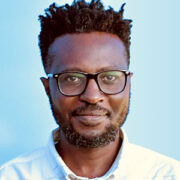
Maurice Oniang’o
Maurice Oniang’o is a Kenyan investigative journalist and documentary filmmaker whose work exposes systemic abuses and institutional failures across East Africa. He has reported for The Guardian, Foreign Policy, National Geographic, Columbia Journalism Review, Al Jazeera, Africa Uncensored, and 100Reporters, covering corruption, social justice, labor exploitation, wildlife crime, and the changing media landscape. His investigations have prompted parliamentary inquiries and policy reviews. A National Geographic Explorer, he also has contributed to documentary programs such as National Geographic’s “Ultimate Vipers,” “NTV Wild,” and “Tazama.” Oniang’o specializes in OSINT, financial analysis, and cross-border investigations. His work has earned numerous honors, including the Thomson Foundation Young Journalist of the Year Award, the AFPC-USA Scholarship Award, and multiple Media Council of Kenya awards.
Oniang’o is exploring how to design sustainable, collaborative models for investigative journalism in East Africa.
Bluesky: @moniango.bsky.social – only one post
X: @moniango
Instagram: @moniangoh2030
LinkedIn
Links:
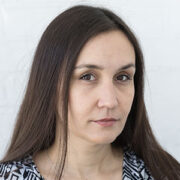
Oksana Parafeniuk
Oksana Parafeniuk is an independent Ukrainian photojournalist based in Kyiv, Ukraine. Her work focuses on the wide-ranging personal and social impacts of war, as well as how people cope with its lifelong and traumatic effects with dignity. In addition to self-directed projects, she regularly works on assignment for The New York Times and The Washington Post, and contributes to NBC News, Libération, NPR, and other media. Parafeniuk has participated in many international exhibitions, and her work has been published in several collective photo books. She is a member UAPP (Ukrainian Association of Professional Photographers), Women Photograph, and The Journal Collective, and has served as an instructor at the National Geographic photo camp.
Parafeniuk is studying how exposure to prolonged conflict affects children and how best to visually document their experiences, especially in long-form formats.
Personal website
Instagram: @oksana_par
Bluesky: @oksanaparafeniuk.bsky.social
X: @Oks_Parafeniuk
Facebook
LinkedIn
Links:
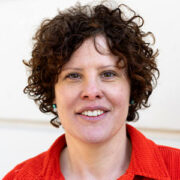
Vivian Pasquet
Vivian Pasquet is a reporter and editor for Germany’s Süddeutsche Zeitung Magazin who specializes mainly in narrative science journalism. She previously was a staff writer for GEO magazine and a contributor to Der Spiegel. A trained physician, Pasquet presents complex medical topics in a way that centers the people involved. She is interested in how scientific progress shapes society and has reported extensively on vaccines. Her reporting has won several awards, including the Holtzbrinck Prize for Science Journalism (in 2025 and 2019) and the Reporter Forum’s 2021 Reporter:innen-Preis. Germany’s Medium Magazine has ranked her among the Top Ten Science Journalists every year since 2017.
Pasquet is exploring scientific breakthroughs, especially in AI and medicine, that can potentially divide societies, and what can be done to ameliorate that.
X: @vipasquet
LinkedIn
Instagram: @vivianpasquet
Links: (articles are in German)
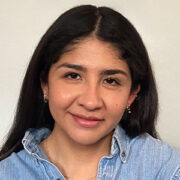
Cecilia Reyes
Cecilia Reyes is an investigative reporter in the Midwestern U.S. who focuses on housing, government accountability, and the consequences of social injustice. She worked as a reporter for Business Insider’s investigations team, where her coverage of illegal evictions was a finalist for a 2025 American Society of Magazine Editors National Magazine Award and a Livingston Award. Before that, Reyes was an investigative reporter for the Chicago Tribune, where her work on “The Failures Before the Fires” exposed how public officials were warned about safety issues in dozens of homes before fires killed 61 people. The series won the 2022 Pulitzer Prize for Local Reporting. A bilingual reporter, she was born and raised in Mexico City.
Reyes is studying how individuals are affected by repeated interviews after traumatic events, and the best practices for journalists collecting firsthand accounts.
Links:
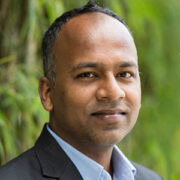
Sagar
Sagar is a senior staff writer for The Caravan in India who specializes in longform and investigative journalism. His reporting has exposed high-profile corporate corruption and crucial voting rights issues, leading to public-interest litigation and citations in global academic papers. A two-time recipient of the Mumbai Press Club’s RedInk Award, Sagar has deepened his expertise through fellowships including a 2024 Chevening South Asia Journalism Fellowship and a 2023 Asia Journalism Fellowship. In 2025, he wrote guidelines for newsrooms on how to understand and report on caste for the Global Investigative Journalism Network.
Sagar is examining the impact of the Indian media’s systemic exclusion of perspectives of people from marginalized castes and the measures that can improve coverage of those communities.
Links:
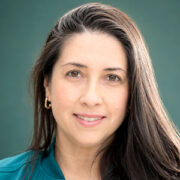
Erin Smith
Erin Smith is a Boston-based journalist who most recently was a senior engagement editor at Politico. Her work as an investigative and engagement reporter has focused on accountability that drives concrete change. She previously launched ProPublica’s national probe into secret tenant-screening algorithms and led investigations for TV and newspapers that prompted product recalls, legislative reforms, and national policy debate. Her work has been recognized with national Edward R. Murrow, SPJ Sigma Delta Chi, and National Headliner awards. She covered the Boston Marathon bombing and the Newtown school shooting, embedded with the U.S. military in Iraq, and once tracked down the people getting rich from robocall boiler rooms.
Smith is studying survey science, crowdsourcing, and AI-assisted methods to help journalists better measure public opinion on sensitive topics.
Links:
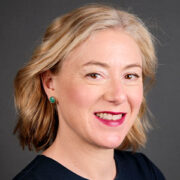
Harriet Torry
Harriet Torry is is The Wall Street Journal’s economics correspondent for the Western U.S., based in Houston. She previously covered the U.S. economy and Federal Reserve from Washington, D.C. She joined the Journal in 2010 as a financial reporter in Frankfurt before moving to Berlin to cover German politics and economics during the euro debt crisis. She regularly writes about economic data and contributes features from around the Western U.S. A fluent German and Spanish speaker, she has also reported on trade and immigration from the U.S.-Mexico border, along with breaking news such as natural disasters and terrorism.
Torry is studying the forces shaping labor-market outcomes, especially for women and with particular attention to the gender pay gap, in an era of profound technological change.
Links:
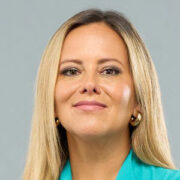
Claudia Uceda
Claudia Uceda is a Washington, D.C.-based national television correspondent who most recently covered Congress, the White House, and the U.S. government for TelevisaUnivision. She has reported on six presidential campaigns, two impeachments, several Supreme Court confirmation battles, and major national crises, including the Jan. 6, 2021, assault on the U.S. Capitol. Her reporting ranges from the U.S.-Mexico border to courtrooms and communities affected by shifting national policies. Previously, she anchored the 11 p.m. local newscast and worked as a general assignment reporter for Univision’s D.C. affiliate. Her reporting has been recognized with three national Emmy Awards and two Gracie Awards. She is the former president of the National Association of Hispanic Journalists D.C. Chapter and a member of the White House Correspondents’ Association.
Uceda is examining how Spanish-language journalists can survive newsroom cuts by leveraging AI and emerging technologies to better serve Latino audiences.
X: @ClaudiaUceda
LinkedIn
Instagram: @cuceda