“Exposed and Expendable,” an exhaustive investigation by New York Times reporter Hannah Dreier that revealed the serious health risks firefighters face when working without masks, is winner of the 2025 Worth Bingham Prize for Investigative Journalism.
The $20,000 award is presented annually by the Nieman Foundation for Journalism at Harvard to a story or series of national significance where the public interest is being ill-served.
A problem hiding in plain sight
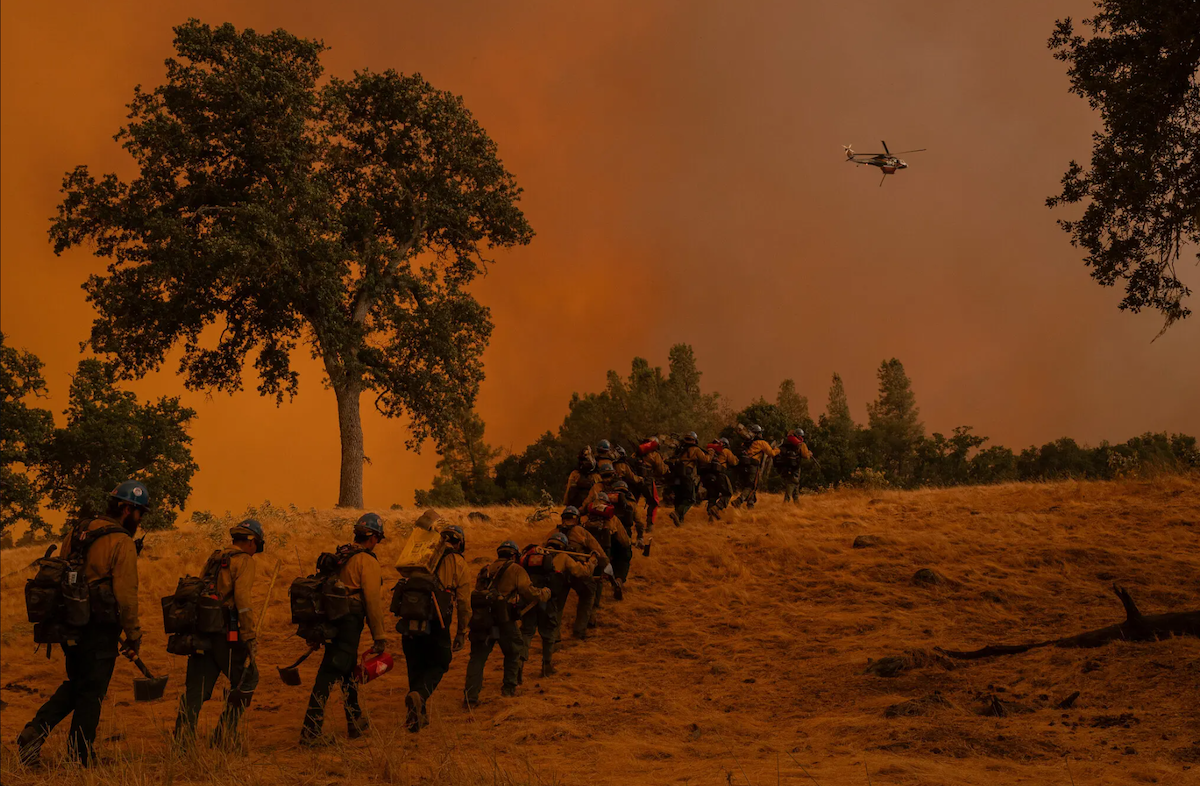
When destructive wildfires raged through the Los Angeles area in January 2025, Hannah Dreier noticed that firefighters were working without masks while residents were told to wear them or stay inside. Dreier set off on a mission to find out why.
Her yearlong investigation uncovered a shocking answer: For decades, the U.S. Forest Service banned masks for firefighters, and the toxic smoke they encountered led to serious illnesses and premature deaths. Although researchers at the agency had warned about the health risks of smoke since the 1990s, their warnings had been ignored, and budget-conscious officials had downplayed the dangers of working without protection.
In the course of her reporting, Dreier conducted more than 400 interviews across the country and visited the front lines of several large fires with photographers to chronicle conditions, sometimes spending 12-hour days near dense fire smoke. She filed public records requests with eight agencies and sifted through thousands of pages of medical and fire service documents. She also faced stalled FOIA requests, denied interviews, and a Trump administration order forbidding employees from talking to the media. Yet she won the trust of sources who shared their personal stories.
Dreier obtained records from the Department of the Interior to build a database that showed growing government reliance on firefighters who work for private contractors without health insurance. She also spoke with undocumented workers who are often given the most carcinogenic firefighting jobs, but who returned to work even after falling ill.
In her articles, she profiled workers with crippling respiratory illnesses, heart disease, and cancers linked to smoke exposure, including young firefighters in their 20s and 30s. The Times embedded footage shot by ill firefighters in each text piece, created a video investigation, and built an episode of “The Daily” podcast to demonstrate what it’s like to work inside toxic smoke.
Bingham Prize judge Jason Grotto said: “With stunning detail and clear prose, Hannah Dreier’s ‘Exposed and Expendable’ captures the absurdity and devastating consequences of the neglect. As wildfires grow more frequent and severe, Dreier’s reporting from the fire line exposed the inhumane treatment of those on the front lines.”
Another judge, Kavitha Surana, added: “The reporting in this series defines an ‘atmosphere of easy tolerance’ that, without persistent investigative journalism, would never change. The stories are told with bracing clarity and empathy, making it impossible to look away from the suffering and reasons why these workers are in the position they are in. Impact was a bull’s-eye, resulting in exactly the changes needed that were highlighted in the reporting.”
To expand the reach of the investigation, the Times adapted the stories for TikTok and Instagram, which firefighters often scroll through during assignments. Dreier participated in a live Reddit “Ask Me Anything” session with firefighters and spoke on the most widely followed firefighter podcast. Spanish translations of the work also circulated among immigrant crews.
New York Times investigations editor Kirsten Danis, who edited the series, and graphics editor Eli Murray, who worked on one of the stories, supported Dreier in her reporting.
Meaningful impact
Response to the series was quick and significant, at both the federal and state level. The U.S. Forest Service reversed its ban on respiratory protection and now distributes masks to workers for free. It has also added guidance in its training materials on how to avoid carcinogens. A bipartisan federal law now grants $450,000 in restitution to wildland firefighters who become disabled or die from smoke-related cancers. Sen. Amy Klobuchar of Minnesota, who sponsored the measure, credited the Times’ reporting with bringing about change.
Five other bills are currently pending, including one that would make the use of masks mandatory and another expanding benefits to contractors.
Other outcomes reported by the Times:
- The Trump administration restored full staffing to the firefighter cancer registry.
- California allocated $9.7 million to study smoke-related illness in wildland firefighters, added a death benefit for incarcerated firefighters, and is working on a mask mandate. A Nevada law added protections for firefighters, including contractors, who develop lung diseases.
- OSHA proposed a rule requiring a full mandatory mask program for wildland firefighters, and the Forest Service agreed to drop its opposition.
- In addition to sponsoring legislation, Sen. Adam Schiff of California got medical bills and lost wages covered for several firefighters featured in the stories.
- Contract firefighters formed an association to advocate for themselves.
- Readers helped firefighters featured in the Times’s stories, paying off medical debt and donating to fundraisers launched after publication, including raising more than $120,000 for one sick father.
- Senators intervened to get workers’ compensation cases approved.
- Graduate students at MIT and Stanford wrote to say they had begun working on specialized masks.
“Exposed and Expendable” was also selected as a finalist for this year’s Taylor Award for Fairness in Journalism. Dreier won the 2023 Bingham Prize for her six-part New York Time investigation “Alone and Exploited,” which exposed the massive scope of America’s hidden migrant child workforce.
About the Bingham Prize
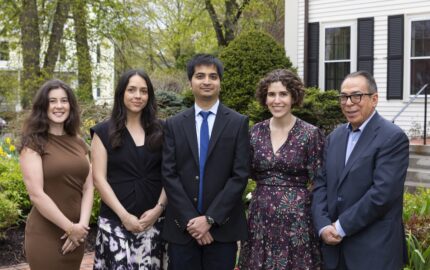
The journalists who judged the Bingham Prize submissions are ProPublica reporters Lizzie Presser and Kavitha Surana, winners with colleagues of the 2024 Worth Bingham Prize for their “Life of the Mother” series, and five Nieman alumni: Jenifer McKim, a 2008 Nieman Fellow and senior editor for investigations and the Equity and Justice Unit at GBH News; Denise-Marie Ordway, a 2015 Nieman Fellow who most recently was managing editor of The Journalist’s Resource at Harvard Kennedy School; Jason Grotto, a 2015 Nieman Fellow and a data investigations editor for Bloomberg News; Gina Smith, a 2025 Nieman Fellow and director of the journalism nonprofit SC Investigates; and Jesselyn Cook, a 2025 Nieman Fellow and senior editor at Noema Magazine.
The Worth Bingham Prize for Investigative Journalism, which includes an award of $20,000, honors investigative reporting of stories of national significance where the public interest is being ill-served. It is presented annually by the Nieman Foundation for Journalism at Harvard University. Worth Bingham, who died at the age of 34, achieved prominence as an investigative journalist and was vice president and assistant to the publisher of the Louisville Courier-Journal. He was a 1954 Harvard University graduate. His family and friends created the annual prize in his memory in 1967.
The Nieman Foundation for Journalism at Harvard educates leaders in journalism, promotes innovation, and elevates the standards of the profession. More than 1,700 journalists from 100 countries have been awarded Nieman Fellowships since 1938. The foundation also publishes Nieman Reports, an online magazine covering thought leadership in journalism; Nieman Journalism Lab, a website reporting on the future of news, innovation, and best practices in the digital age; and Nieman Storyboard, a website showcasing exceptional narrative journalism and nonfiction storytelling.