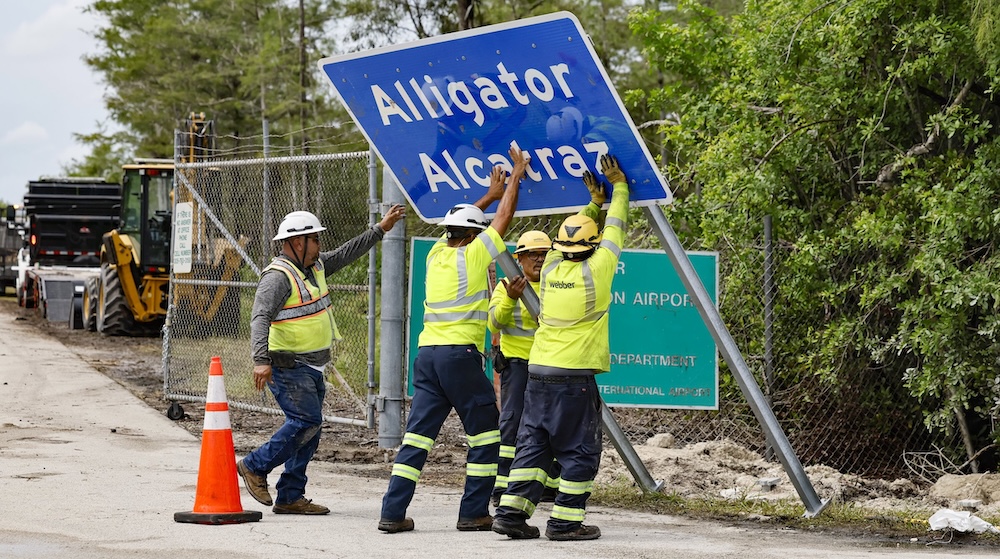

“Alligator Alcatraz,” a four-part series by the Miami Herald and Tampa Bay Times that exposed falsehoods spread by state and federal officials about Florida’s most controversial migrant detention center, is the winner of the 2025 Taylor Family Award for Fairness in Journalism.
The award, including a $10,000 prize for the winner, is administered by the Nieman Foundation for Journalism at Harvard.
The winning news organizations’ investigation revealed that hundreds of migrants held in Florida’s “Alligator Alcatraz” detention center, which government officials said would be reserved only for the “worst of the worst,” in fact faced no criminal charges in the U.S. Some had the legal right to remain in the country while their immigration cases were processed.
The reporting shattered false narratives spread by federal and state officials about the facility and identified more than 700 people held or scheduled to be sent there whose names were missing from a publicly accessible government database.
Judges also selected two finalists for the Taylor Award:
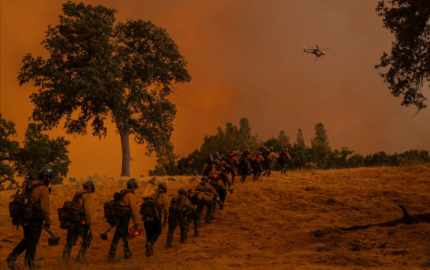
- “Exposed and Expendable,” a series by New York Times reporter Hannah Dreier, showed how a decades-long U.S. Forest Service ban on the use of protective masks by wildland firefighters exposed workers to toxic smoke that caused serious illnesses and led to early deaths.
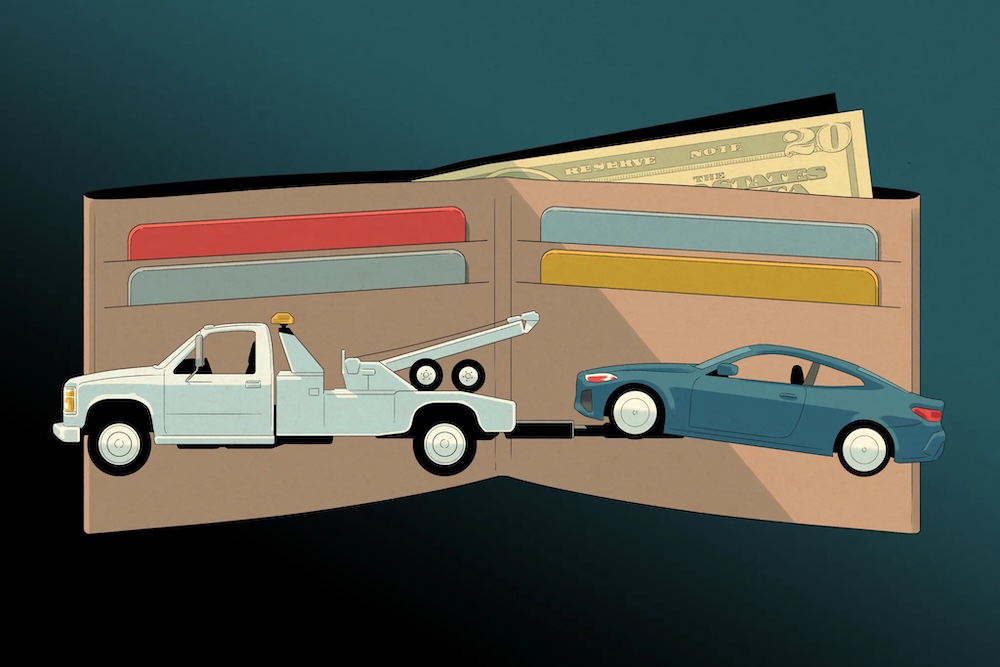
- “On the Hook: Investigating Towing Practices in Connecticut,” a joint investigation by The Connecticut Mirror and ProPublica, uncovered predatory state towing practices that targeted low-income residents, sometimes with devastating results for those unable to pay hefty fines and recover their vehicles before they were sold for profit.
The Taylor Award Winner
“Alligator Alcatraz” (Miami Herald and Tampa Bay Times)
After the migrant detention camp dubbed “Alligator Alcatraz” — a makeshift collection of tents and cages constructed on an abandoned airstrip in the alligator-infested Florida Everglades — opened in July 2025, little information about those held at the state-run facility was shared publicly.
The state refused to release the full list of detainees, offering only selective information on those confined there who had criminal records.

Responding to the dearth of information about what was happening at the site, reporters quickly obtained internal government data that countered that claim, showing that hundreds of men at the facility did not have a criminal conviction and others were legally allowed to remain in the country rather than be deported.
The Herald and Times obtained a list of the names of the first men held at the facility and then published them in a searchable database, knowing that concerned family members and lawyers were unable to locate their loved ones or clients, and a government database of migrant detainees did not list the names of those housed at the detention camp.
The journalists took precautions to protect sources and vulnerable individuals and to vet information about the facility, which was distorted by misinformation. Anonymity was granted to some family members who feared retribution for speaking publicly.
The reporters showed that one man who had lived in the U.S. for decades was mistakenly sent to Guatemala, and that a 15-year-old had been sent to the center in violation of the government’s own policy. Many Alligator Alcatraz detainees disappeared from government records after leaving the facility, making them especially difficult to trace.
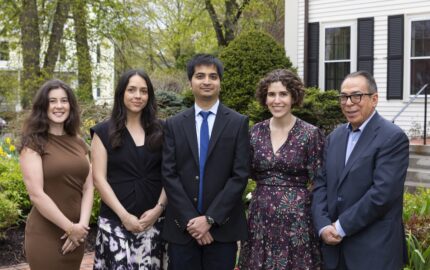
The reporting team comprised Miami Herald reporters Ana Ceballos, Ben Wieder, and Ana Claudia Chacin, investigations and data reporter Shirsho Dasgupta, and Claire Healy, an Esserman Investigative Fellow.
Taylor Award judges praised the series for filling the void left by the lack of reliable government record-keeping.
Judge Cassandra Jaramillo said: “The Miami Herald and Tampa Bay Times investigation of Alligator Alcatraz brought visibility to an unprecedented government operation. The team overcame records-obstruction from government agencies that would not disclose whom they were incarcerating. This is a distinguished piece of ethical journalism that brought fairness to underrepresented immigrants, overcame government obfuscation, and uncovered poor treatment in one of the largest detention efforts overseen by the state of Florida.”
Another judge, Deborah Barfield Berry, added: “The project exemplified fairness by highlighting how a system set up to detain and deport undocumented immigrants has been anything but fair. The team did impressive work, obtaining information about the detainees in the camp and publishing it, providing a public service.”
Taylor Award Finalists
“Exposed and Expendable” (The New York Times)
Hannah Dreier’s “Exposed and Expendable” investigation uncovered a problem hiding in plain sight, demonstrating in careful detail how a U.S. Forest Service ban on masks for firefighters led to serious illnesses and premature deaths from toxic smoke. Researchers at the forest agency had warned about the health risks of smoke since the 1990s and urged the distribution of masks, but their pleas had been ignored.
Decision-makers had downplayed the risks because of budget concerns and falsely claimed that masks were unworkable because they hampered the firefighters’ movements.
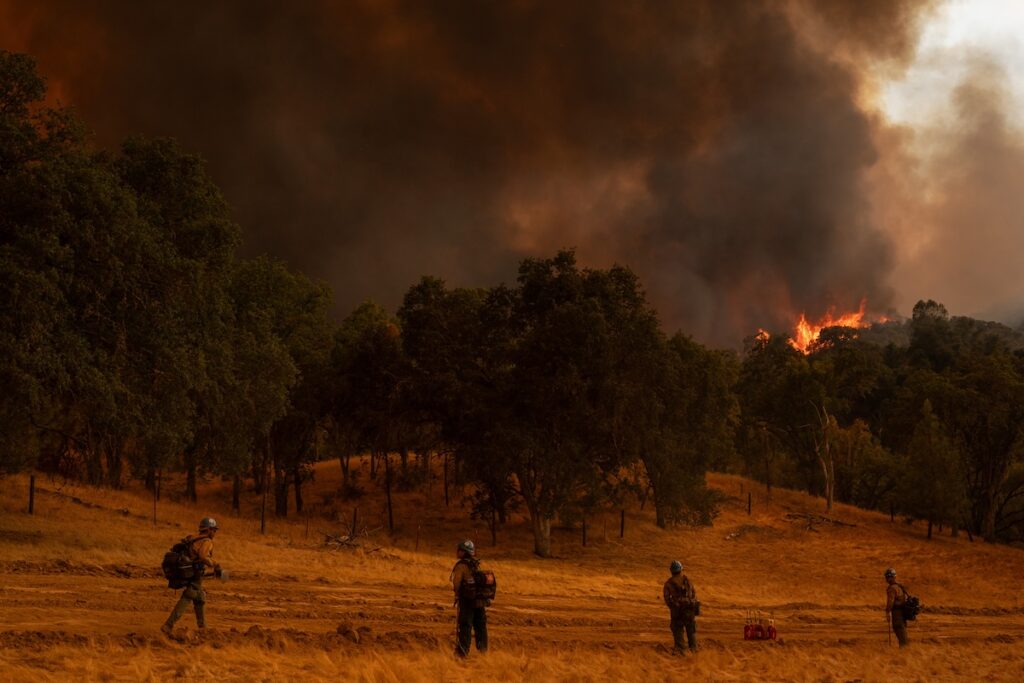
Dreier’s quest to learn why firefighters battling major fires didn’t wear masks led her on a 12-month, cross-country journey during which she interviewed hundreds of firefighters and traveled with photographers to the front lines of several large fires. She obtained records from the Department of the Interior to build a database showing growing government reliance on firefighters who work for private contractors without health insurance, the safety net that helps protect public workers.
Dreier filed public records requests with eight agencies and combed through thousands of pages of medical and fire service documents. Despite stalled FOIA requests, denied interviews, and a Trump administration order forbidding employees from talking to the media, Dreier won the trust of individuals who shared with her their personal experiences.
She met workers with crippling respiratory illnesses, heart disease, and cancers linked to smoke exposure, including young firefighters in their 20s and 30s. She also spoke to undocumented workers who were given the most carcinogenic jobs, but who returned to work even after falling ill.
New York Times investigations editor Kirsten Danis, who edited the series, and graphics editor Eli Murray, who worked on one of the stories, supported Dreier in her reporting.
Response to the series was quick and significant, at both the federal and state level. The U.S. Forest Service reversed its ban on respiratory protection and now distributes masks to workers for free. It has also added guidance in its training materials on how to avoid carcinogens. A bipartisan federal law now grants $450,000 in restitution to wildland firefighters who become disabled or die from smoke-related cancers. Five other bills are pending, including one that would make the use of masks mandatory and another expanding benefits to contractors.
Taylor Award judges noted the importance of the topic as climate change increases the frequency and severity of wildfires.
Judge Carol Marbin Miller said: “Hannah Dreier’s series on wildfire firefighter exposed a danger to the lives and health of public servants, many of whom were never told they were performing their jobs under conditions that could kill them. Her reporting showed that lives were imperiled not just out of ignorance, but from deliberate actions to save money on the backs of human lives. The series didn’t just open a window onto the issue; it began the process of reform.”
“Exposed and Expendable” has also been selected as the winner of the Nieman Foundation for Journalism’s Worth Bingham Prize for Investigative Journalism.
“On the Hook: Investigating Towing Practices in Connecticut” (The Connecticut Mirror and ProPublica)
The Connecticut Mirror and ProPublica’s joint investigation, “On the Hook,” examined unscrupulous vehicle-towing practices in the state of Connecticut that often targeted residents in low-income neighborhoods. Companies towed cars, frequently for minor infractions such as expired parking stickers, and then sold them within 15 days, one of the shortest turnaround times in the country. The practice was legal because of an archaic state law.
Many people couldn’t save up enough money to retrieve their cars in time, and without them, they lost jobs, couldn’t pay rent, and, in some cases, ended up homeless.
The reporters discovered that towing companies were undervaluing cars, allowing them to sell the vehicles more quickly, and sometimes refused to take credit cards, making payments difficult. The companies also held on to personal belongings, using the items as an inducement to get people to pay excessive fees.
The Department of Motor Vehicles delayed responding to a FOIA request, and when documents finally arrived, they were heavily redacted and many were handwritten. The reporting team used the information to build their own database to track towing practices. They also filed public records requests to obtain police call logs and scrutinized the information to locate towing hot spots. To learn more about those who had been targeted, they created a document that allowed people to share their experiences and hand-delivered flyers with a QR code linking to the form to apartment complexes across the state.
The stories had immediate impact. Within a day of publication, Connecticut’s Department of Motor Vehicles announced that it was reviewing towing practices, and lawmakers proposed a bill overhauling the state’s towing law. It passed in May 2025 with bipartisan support. Towing companies must now accept credit cards, let people retrieve their belongings, and issue warnings before removing vehicles from apartment parking lots unless there’s a safety issue. They must also wait at least 30 days before selling towed vehicles.
The Connecticut Mirror staff who produced the series are investigative reporter Dave Altimari, children’s issues and housing reporter Ginny Monk, data reporter José Luis Martínez, and photojournalist Shahrzad Rasekh. They worked together with ProPublica colleagues including data reporters Sophie Chou and Haru Coryne, data reporting fellow Ken B. Morales, and engagement reporter Asia Fields.
Taylor Award judge Linda Robertson said: “Through painstaking data reporting and sensitive interviews, the Mirror and ProPublica exposed abuse of power, financial malfeasance, and lack of oversight by the state DMV. The impact of the project was immediate, prompting a bipartisan effort by state legislators to overhaul towing laws —a true example of David-vs.-Goliath eye-opening journalism.”
The Taylor Award for Fairness in Journalism
The journalists who judged the 2025 Taylor Award competition are ProPublica reproductive rights reporter Cassandra Jaramillo, a member of the team that won the Taylor Award last year for “Life of the Mother”; Miami Herald reporters Linda Roberston and Carol Marbin Miller, who were selected as Taylor Award finalists for their 2024 series “Guilty of Grief”; journalist Rhana Natour, a Taylor Award finalist for The Atavist Magazine’s 2024 article “Coming to America”; and Deborah Barfield Berry, a 2023 Nieman Fellow and director of the Philip Merrill College of Journalism’s Capital News Service Annapolis Bureau.
Following Nieman’s conflict-of-interest guidelines, Jaramillo recused herself from judging “On the Hook,” and Robertson and Marbin Miller recused themselves from judging “Alligator Alcatraz.”
The Taylor Award includes a $10,000 prize for the winner and $1,000 each for the two finalists. The award program was established through gifts for an endowment by members of the Taylor family, who published The Boston Globe from 1872 to 1999. The purpose of the award is to encourage fairness in news coverage by America’s journalists and news organizations.
The Nieman Foundation for Journalism at Harvard educates leaders in journalism, promotes innovation, and elevates the standards of the profession. More than 1,700 journalists from 100 countries have been awarded Nieman Fellowships since 1938. The foundation also publishes Nieman Reports, an online magazine covering thought leadership in journalism; Nieman Journalism Lab, a website reporting on the future of news, innovation and best practices in the digital age; and Nieman Storyboard, a website showcasing exceptional narrative journalism and nonfiction storytelling.