
The Fellowship Year
During their time in Cambridge, Nieman Fellows take an extensive range of courses at Harvard and MIT and participate in Nieman Foundation programming created exclusively for them, including author Steve Almond’s popular narrative nonfiction writing class. In seminars and workshops at the foundation, they hear from Harvard professors, leading journalists, and media innovators who share their research and insights. The fellows also attend many of the countless events and lectures held elsewhere on campus each semester.
The fellows prepare and present Soundings, weekly talks in which they explain why they do what they do as journalists. They also explore topics of interest by organizing DIY sessions, inviting guests to discuss their work, and moderate many of the talks at Lippmann House, Nieman’s home on the Harvard campus.
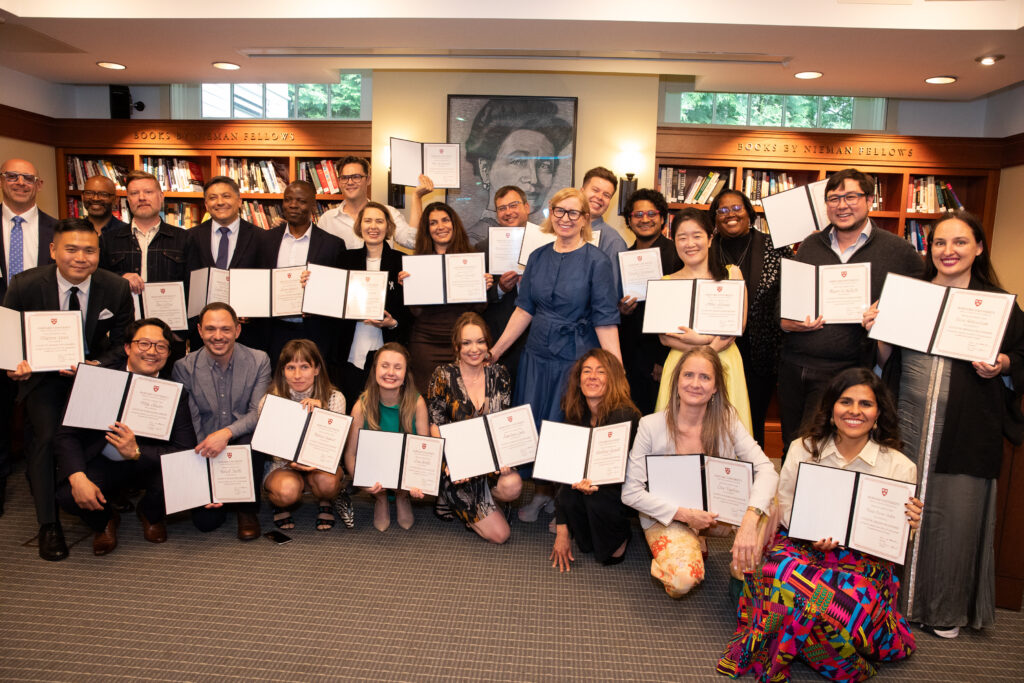
The academic year begins with a lightning round during which fellows describe the focus of their work, and each spring, they learn about the book industry and pitch their ideas during a workshop with publishing executives and literary agents organized by author and 1994 Nieman Fellow Larry Tye.
Throughout the year, the fellows speak in classes, participate in panel discussions and conferences, and mentor student journalists at The Harvard Crimson, the university’s independent student newspaper. Some join Harvard Houses as affiliates and share their insights and experience with undergraduates while others organize training sessions for their Nieman classmates to share their expertise and teach them new skills. Topics this year included practical AI tools for journalists, narrative writing, how to use LinkedIn, what to include in a professional camera kit, and journalism fundraising.
Engagement on campus and in the community
The Class of 2025
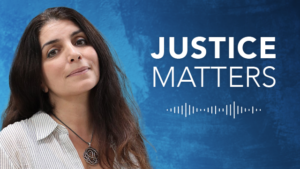
Lina Chawaf, NF ’25, a Syrian journalist and founder of Radio Rozana, discussed “Radio as a Tool for Change in Syria” on the “Justice Matters” podcast produced by the Harvard Kennedy School’s Carr-Ryan Center for Human Rights. In a separate conversation with Mathias Risse, faculty director of the Carr-Ryan Center, she provided an overview of human rights in Syria and spoke about the experiences of Syrian journalists who faced arrest, torture, and death at the hands of the Assad regime for their reporting on human rights violations, as well as the evolving status of women’s rights. She also led a spring Carr-Ryan Center study group on female leadership in conflict.
In an interview with the Incubator for Media Education and Development, Chawaf talked about the challenges and opportunities for independent journalism in the unstable media landscape in Syria after the fall of the Assad regime. And in April, she was a moderator at the 2025 Arab Conference at Harvard.
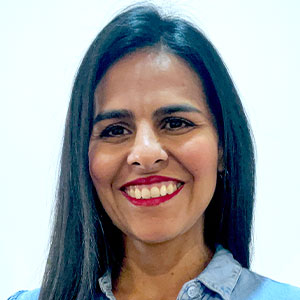
In February, Chawaf and classmate Diana Durán Nuñez, NF ’25, a print and television journalist from Colombia, participated in the panel discussion “Democracy as a Continuum: Comparisons Around the World” at Tufts University’s Tisch College Initiative for Global Leadership’s Democracy on the Brink symposium.
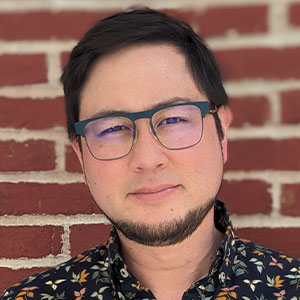
Ryan Kellett, NF ’25, former vice president of audience at Axios Media and a 2025 Nieman-Berkman Klein Fellow, spoke about “The future of journalism: How creators are changing the news,” a lecture organized by the Harvard T.H. Chan School of Public Health’s Center for Health Communication and the Stanford Health Equity Media Fellowship. He additionally was a speaker at WAN-IFRA’s World News Media Congress in May in Krakow, Poland, speaking on the panel “From Audience to Community.”
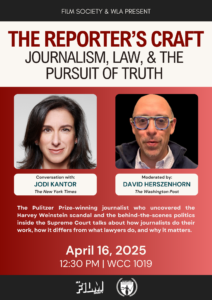
David Herszenhorn, NF ’25, The Washington Post’s Russia, Ukraine, and East Europe editor, moderated the panel discussion “Fortifying Europe’s Frontlines: Ukraine and NATO” at the student-run 2025 European Conference at the Harvard Kennedy School. The theme for the year was “Leader or Dreamer? Europe’s Role in a Fragmented World Order.” He also moderated the Harvard Law School event “The Reporter’s Craft: Journalism, Law, and the Pursuit of Truth” with New York Times reporter Jodi Kantor.
Herszenhorn was a panel speaker for “Journalism in Times of War and Uncertainty,” the inaugural Georgia-Ukraine seminar at Harvard’s Davis Center for Russian and Eurasian Studies. He additionally spoke about his book, “The Dissident: Alexey Navalny: Profile of a Political Prisoner,” during a “Russia After Navalny” fireside chat organized by the Harvard Kennedy School’s Global Democracy Caucus.
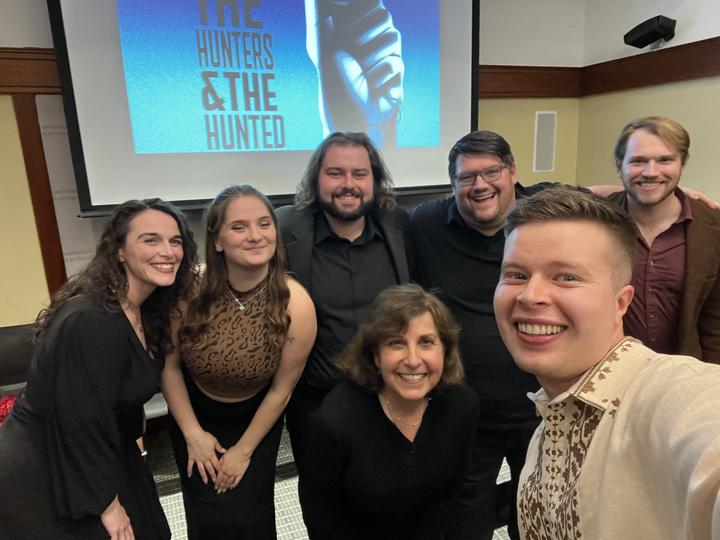
Kyrylo Beskorovainyi, NF ’25, a media entrepreneur and co-founder and publisher of the Ukrainian popular science media company Kunsht, presented “The Hunters and the Hunted,” a reading of a musical he co-wrote and co-composed. The performance premiered at the Kyiv National Academic Operetta Theatre in June 2023 and has remained in the venue’s repertoire ever since. The musical weaves together historical events with present-day global issues, illuminating Ukraine’s culture and heritage while exploring the dynamic between oppressor and oppressed, tyranny and freedom.
Beskorovainyi also helped promote “Freedom in the equation,” an exhibition dedicated to repressed and murdered Ukrainian scientists that was displayed at the Harvard Science Center. The exhibition is part of the Science at Risk project, supported by Kunsht, the ZMIN Foundation, and the Ukrainian Research Institute at Harvard University, in collaboration with MyScience.ua and Ukrainian Scientists at War.
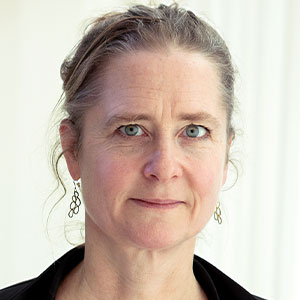
Line Vaaben, NF ’25, an editor and immersive journalist at the Danish daily Politiken, was a guest lecturer for the “Behind the Prize” journalism course at The Media School at Indiana University.
Vaaben, along with Ben Reininga, NF ’25, former head of editorial at Snapchat and a 2025 Nieman-Berkman Klein Fellow, and Susan Orlean, NF ’04, author and staff writer for The New Yorker, were speakers at the 2025 Power of Narrative Conference at Boston University in March.
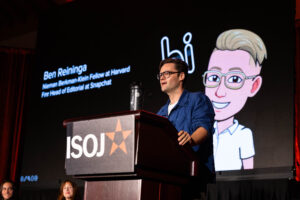
In February, Reininga organized “Vibes Matter – What Makes Us Trust the News?”, a workshop presented as part of Harvard Law School’s HLS Beyond event series. The interactive talk delved into what makes users trust news videos, with the hope of providing more insight and tools to news publishers and to help them connect with audiences.
In March, Reininga spoke at the 2025 International Symposium on Online Journalism in Austin, Texas, and joined a discussion about “New understandings of ‘journalist’ and ‘journalism’ in the age of influencers.” His Nieman classmate Lina Chawaf also spoke at the conference, participating in the panel “Global roundup: Challenges to journalism around the world.”
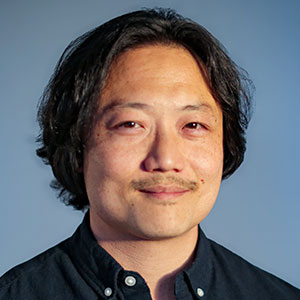
Mike Shum, NF ’25, a filmmaker director and producer, moderated a discussion at the Harvard Art Museums following the screening of “Art for Everybody” about Thomas Kinkade — the “Painter of Light”— with filmmakers Miranda Yousef and Tim Rummel.
Shum also delivered the commencement speech at Colorado College, his alma mater, in May.
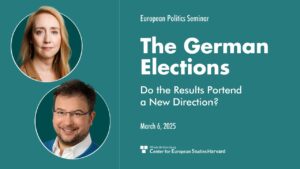
Benjamin Bidder, NF ’25, an economics and business reporter for the German news magazine Der Spiegel, joined Spiegel deputy editor-in-chief Melanie Amann, a 2025 fellow atHarvard’s Minda de Gunzburg Center for European Studies,for the panel discussion “The German elections: Do the results portend a new direction?”
Bidder also presented “A German Journalist’s View on the Future of Transatlantic Relations,” a lecture at Georgetown University’s Center for German and European Studies.
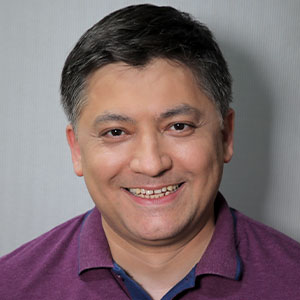
Lasha Kveseladze, NF ’25, an investigative journalist from Tbilisi, Georgia, participated in the panel discussion “Georgia’s Political Crisis: Domestic Unrest and Global Implications,”which was organized by the Russia and Eurasia Program at The Fletcher School at Tufts University.
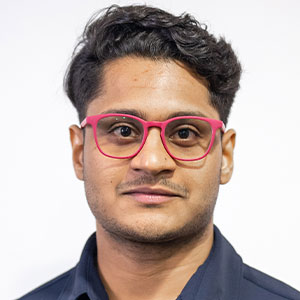
Nilesh Christopher, NF ’25, an India-based technology reporter, spoke at the 5th International Conference on Social Media and Society in India at the University of Michigan, Ann Arbor, in April. His topic was “Deepfakes and the 2024 Election: Pipelines of Creation, Use and Detection” – presented as part of a panel on politics, propaganda, and public opinion.
Christopher also spoke on two panels at the 2025 International Journalism Festival in Perugia, Italy: “Beyond the algorithm: How to report on generative AI outside the West” and “Detecting AI deception in the real world: Lessons learned from the experts.”
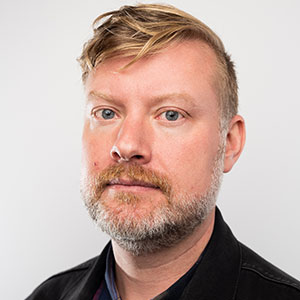
Jon Collins, NF ’25, a senior reporter who covers the future of public safety for MPR News in Minneapolis, was featured in a SAG-AFTRA profile about his Nieman Fellowship. He reflected on his time at Harvard, saying: “I think the most important aspect of the fellowship is the relationship between the 24 journalists from across the world. We learn from one another and, more importantly, build what we hope are lifelong relationships that will support us in our future endeavors.”
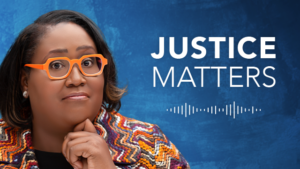
Darcel Rockett, NF ’25, a senior journalist at the Chicago Tribune, was a guest on the Carr-Ryan Center for Human Rights’ “Justice Matters” podcast and spoke about “DEI, Affirmative Action, and the Future of the Black Middle Class.” At Harvard, Rockett researched the impact of the Supreme Court’s reversal of affirmative action in higher education and the repercussions of that decision on the future of the Black middle class.
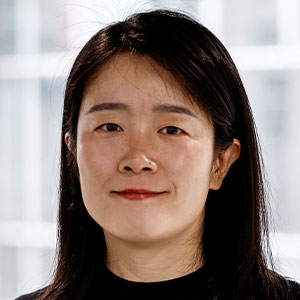
Albee Zhang, NF ’25, a correspondent for Reuters in China, was a guest on the “Face Off: The U.S. vs. China” podcast and talked with host Jane Perlez about modern feminists in China.
Marcus Yam, NF ’25, a foreign correspondent and photojournalist at the Los Angeles Times, spoke about “Fostering Empathy, Finding Voice in Photojournalism” at the Poynter Fellowship in Journalism program at Yale University in April.
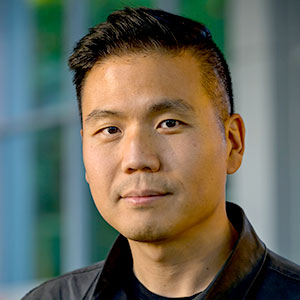
Robert Libetti, NF ’25, most recently executive producer for video investigations at The Wall Street Journal, moderated “Dealing with Leaks in the Age of AI and Disinformation” a panel discussion with classmate Sandrine Rigaud, NF ’25, former editor-in-chief of Forbidden Stories, journalist Paul Radu, co-founder and head of innovation at the Organized Crime and Corruption Reporting Project, and Mark MacGann, the whistleblower behind the Uber Files. The event was presented by Harvard Kennedy School’s Shorenstein Center on Media, Politics and Public Policy.
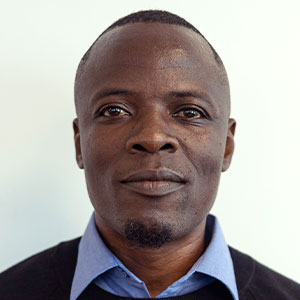
James Okong’o, NF ’25, a Kenyan digital investigation journalist for Agence France Presse, was a panelist at the University of Notre Dame’s 2025 Global Democracy Conference in May. He spoke about “Mass Media and Social Networks: Journalists and Influencers.” The panel was chaired by Frank Langfitt, NF ’03, a roving national correspondent for National Public Radio.
Learn more about the Nieman Class of 2025.
The Class of 2026
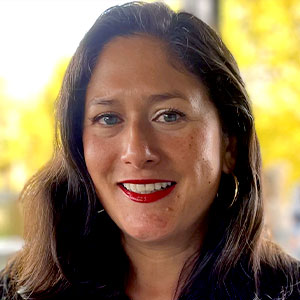
Cindy Carcamo, NF ’26, most recently a staff writer for the Los Angeles Times, and Silvia Foster-Frau, NF ’26, a national investigative reporter who covers immigration for The Washington Post, participated in the Harvard Latino Alumni Alliance’s Latino Alumni Conference & Reunion. Carcamo moderated the panel “Latinos in Business & Industry: Shaping the Future of the U.S. Economy,” and Foster-Frau moderated a session on “Driving Impact Through Nonprofits and Politics.”
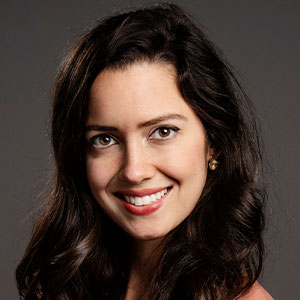
Foster-Frau also took part in the panel discussion “What Ties a Nation Together?” organized by the Safra Center for Ethics’ Civil Discourse initiative. The Harvard Gazette covered the event and quoted Foster-Frau commenting on the power of bridging political differences: “Oftentimes, it’s about stripping back language that clearly triggers reactions in one camp or another. When you really clear that out and talk to people, it’s amazing how much people have in common.”
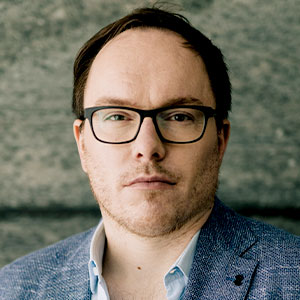
Daniel Drepper, NF ’26, most recently the head of investigative cooperation among the Süddeutsche Zeitung newspaper and the German public broadcasters NDR and WDR, moderated the panel discussion “Free Press, Fragile World: Journalism and Democracy Across the Atlantic” at the 2025 German American Conference organized by students at Harvard Kennedy School. The talk featured Silvia Foster-Frau with German journalists Gudrun Engel and Melanie Amann. They discussed how U.S. and German media can support democratic values in the face of disinformation, polarization, and geopolitical tensions.
Drepper also spoke about investigative journalism as an online guest lecturer at the University of the Bundeswehr Munich.
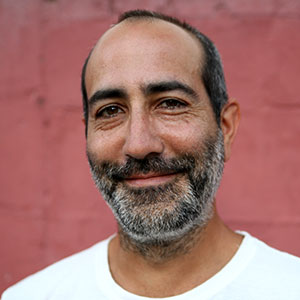
Shaun Raviv, NF ’26, an independent longform audio and print journalist based in Atlanta, gave a talk and answered questions during a gathering with the Harvard Undergraduate Creative Writing Collective.
Jessica Glenza, NF ’26, a senior health reporter for the Guardian US, moderated a panel discussion at the Harvard Art Museums following a screening of the film “Loving Vincent,” an animated film portraying the life of Vincent van Gogh and his struggles with depression and emotional turmoil.
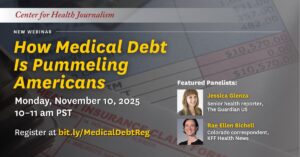
Glenza also joined Rae Ellen Bichell, Colorado correspondent for KFF Health News, to discuss “How Medical Debt Is Pummeling Americans,” during a webinar hosted by the University of Southern California’s Center for Health Journalism.
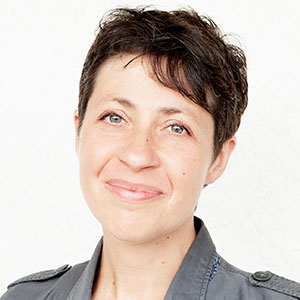
Irene Caselli, NF ’26, an Italian journalist who focuses on early childhood and leads the Early Childhood Journalism Initiative at the Global Center for Journalism and Trauma, spoke about her work during “The Stress for Survival: Being a Freelance Journalist,” a panel discussion at the Mental Health in Journalism Summit 2025, an online conference sponsored by The Self-Investigation.
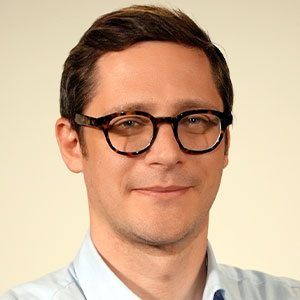
Andrea Marinelli, NF ’26, deputy editor of the foreign affairs desk at Italy’s leading newspaper, Corriere della Sera, spoke to a Northeastern University class about covering conflict.
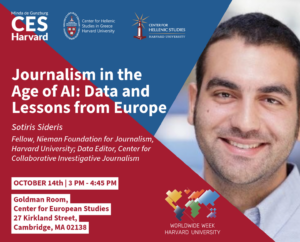
Sotiris Sideris, NF ’26, a data editor at the Center for Collaborative Investigative Journalism in the U.S. and Reporters United in Greece, gave a presentation about “Journalism in the Age of AI: Data and Lessons from Europe.” The talk was co-sponsored by Harvard’s Center for Hellenic Studies and the European Union Seminar during Worldwide Week at Harvard. The Harvard Gazette and The Harvard Crimson both covered the talk.
Marinelli, Sideris, and their Nieman classmate Lisa Hagen, NF ’26, a national reporter for NPR who covers the mainstreaming of extreme beliefs, joined Melanie Amann, deputy editor-in-chief of Der Spiegel and a fellow at Harvard’s Minda de Gunzburg Center for European Studies (CES), for “The Rise of the Far Right in Europe and the U.S.: Patterns and Links,” a panel discussion sponsored by CES and the Nieman Foundation.
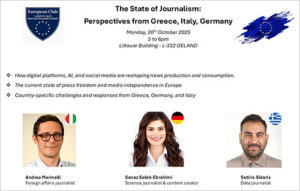
Marinelli, Sideris, and Nieman affiliate Sanaz Saleh-Ebrahimi participated in “The State of Journalism: Perspectives from Greece, Italy, and Germany,” a panel discussion hosted by the European Club at Harvard Kennedy School.
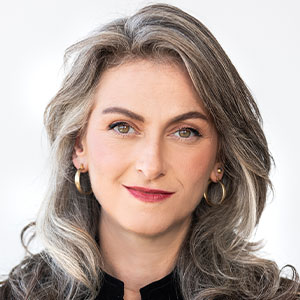
Shany Littman, NF ’26, a magazine and feature writer for the Israeli newspaper Haaretz, was invited by Brandeis University’s Hebrew Language, Literature, and Culture Program to discuss Israeli theater and society. She also was interviewed on Zoom for a conference in Israel hosted by IDEA: The Center for Liberal Democracy. In November, Littman participated in panel discussions about the state of journalism after Oct. 7 at the Other Israel Film Festival in New York, which was presented in partnership with Haaretz.
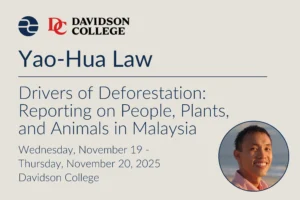
In November, Yao-Hua Law, NF ’26, a science and environment journalist who co-founded Macaranga Media, Malaysia’s only environmental news outlet, delivered the semiannual Pulitzer Center Lecture at Davidson College in North Carolina. The theme was “The Drivers of Deforestation: Reporting on People, Plants, and Animals in Malaysia.”
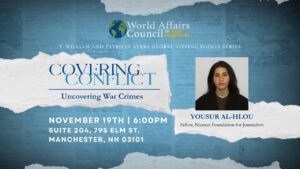
Yousur Al-Hlou, NF ’26, a visual journalist who most recently reported on international breaking news and investigations for The New York Times, spoke at the World Affairs Council of New Hampshire as part of the T. William & Patricia Ayers Global Tipping Points Series. During her talk, “Covering Conflict: Uncovering War Crimes,” Al-Hlou shared insights about the critical role journalists play in shaping public understanding of global events.
In December, Ridwan Karim Dini-Osman, NF ’26, a Ghanaian journalist who works as a senior reporter and news presenter at the EIB Network in Accra and a freelance correspondent for the U.S. radio program “The World,” participated in the webinar “Communicating the Global Impact of U.S. Policies,” sponsored by the Pulitzer Center as part of the Consortium of Universities for Global Health’s virtual Global Health Week. Dini-Osman and other Pulitzer Center grantees discussed their reporting on the global health impacts of U.S. foreign aid cuts.
Learn more about the Nieman Class of 2026.
Soundings
Nieman Fellows take turns explaining why they do what they do as journalists during weekly talks called Soundings. Some highlights from 2025, via Nieman Reports:
The Antidote to Ignorance
On the search for my name’s meaning, and my life’s work
By Kyrylo Beskorovainyi, NF ’25
At Journalism’s Edge
On a career focused on media’s digital transformation
By Ryan Y. Kellett, NF ’25