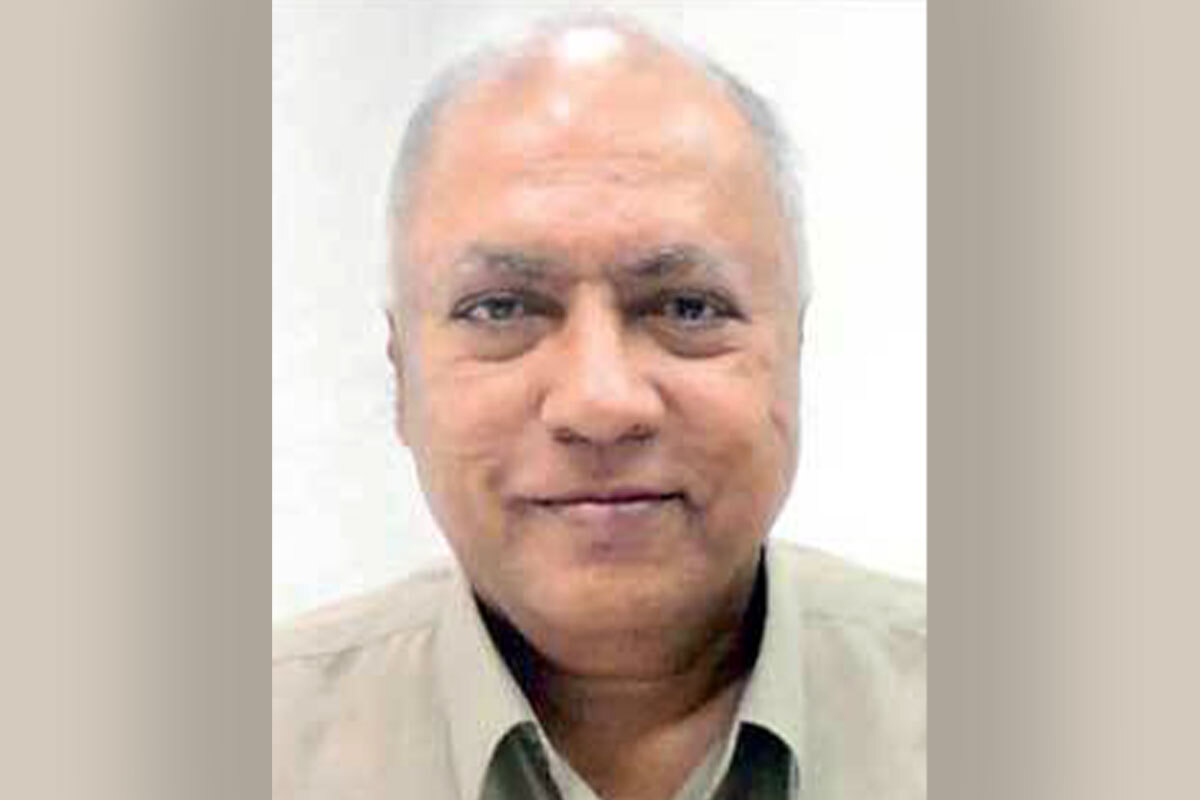
David Buell Sabapathy “D.B.S.” Jeyaraj, a political journalist and columnist who reported on events in Sri Lanka both on the ground and while living in exile in Canada for nearly four decades, died on May 17, 2026, in Toronto at the age of 71.
Born in Colombo, Sri Lanka, in 1954, Jeyaraj studied at Jaffna College before beginning his journalism career at the Tamil-language newspaper Virakesari in 1977. He later worked as the Colombo correspondent for the Indian daily The Hindu, wrote for several Sri Lankan publications, including The Island, the Daily Mirror and Daily FT, and contributed to the BBC Tamil service.
Jeyaraj reported extensively on Sri Lanka’s violent civil war between the Sri Lankan armed forces and the separatist Liberation Tigers of Tamil Eelam (LTTE), also known as the Tamil Tigers, which began in July 1983.
In October 1987, when war broke out between the LTTE and the Indian Peace Keeping Force (IPKF), an Indian military unit that had been deployed to Sri Lanka, Jeyaraj obtained documents and photos that revealed how that conflict was adversely affecting the civilian population. That information was published in a series of articles in The Sunday Island that included an interview Jeyaraj had conducted with the then deputy leader of the LTTE, Gopalaswamy Mahendrarajah, also known as “Mahattaya.”
Indian diplomats in Colombo were unhappy with the coverage and pressured Sri Lankan officials to arrest Jeyaraj and question him about the interview. He was detained for five days but released on bail thanks in part to protests from media colleagues in and outside Sri Lanka. Although the Attorney General’s office eventually ruled that there was no case against him, friends convinced him to leave Sri Lanka for his own safety when criticism of his work by the LTTE turned to death threats.
Jeyaraj applied and was accepted for a Nieman Fellowship at Harvard University and spent the 1988-1989 academic year studying in the United States. In a 2014 interview with Marianne David for DailyFT, he explained what happened next:
“When the then Nieman Foundation Curator Howard Simons asked me whether he was to make arrangements for me to stay in the U.S. indefinitely, I declined saying I was definitely going back. But as June 1989 approached and I prepared to return, the situation in Sri Lanka got worse and a whole lot of friends in the media including [journalist and human rights activist] Richard de Zoysa advised me not to return at that stage and instead wanted me to stay away for some time and then come back.”
Acting on that warning, Jeyaraj arranged to stay with a cousin in Canada. However, when he was preparing to return home the next year, de Zoysa was abducted and murdered, and a number of other journalists fled Sri Lanka. Jeyaraj decided to remain in Toronto, where he co-founded a Tamil weekly and then independently started another independent Tamil weekly called Manjarie. As the war dragged on, he realized that he would not be able to return safely until the fighting stopped. But even abroad, his continued reporting put him at risk.
In February 1993, Jeyaraj was brutally assaulted in a Toronto parking lot by four men who fractured both of his legs with baseball bats. Although he provided police with information about those responsible, no arrests were made in the case.
His paper was forced to close in 1995, but Jeyaraj continued to produce a weekly column and remained deeply committed writing about Sri Lanka and Tamil issues on his website dbsjeyaraj.com. Known for meticulous fact-checking and his balanced reporting, Jeyaraj earned the trust of broad sectors of Sri Lankan society. From his adopted city of Toronto, he provided political commentary and analysis that was too dangerous for many of his colleagues to publish in Sri Lanka.
In a tribute in the Colombo Telegraph, Sri Lankan political activist Lionel Bopage wrote: “What distinguished DBS from many of his contemporaries was not only his courage, which was conspicuous, but his insistence on holding his own community to account. He documented atrocities committed by the Sri Lankan state and by the LTTE with the same forensic precision. … Many readers in the diaspora turned to him because he provided what they could find nowhere else: journalism that refused the comfort of a single narrative, that acknowledged complexity, that held the community accountable to itself. His credibility extended across ethnic lines. Sinhalese, Tamil, Muslim and Burgher Sri Lankans read him. They trusted him. That trust was earned through decades of refusing to distort.”
Human Rights Watch and Amnesty International also cited his work in their reports.
The civil war in Sri Lanka officially ended in 2009, but Jeyaraj did not return for a visit until 2013, a full 25 years after he left. In a lengthy interview about that experience, he said: “ There is always a little bit of Sri Lanka in the hearts of all her children who have migrated elsewhere. In my case it is not merely a little bit, as Sri Lanka has always been in my heart in a very big way.”
Jeyaraj continued to write until shortly before his death. During his lifetime, he produced a comprehensive account of Sri Lanka’s ethnic conflict that informed readers and scholars around the world.
Learn more:
- DBS Jeyaraj’s website
- D.B.S. Jeyaraj, Fearless Chronicler of Sri Lanka’s War, Dies in Exile (Jaffna Monitor)
- Noted Sri Lankan journalist D.B.S. Jeyaraj dies in Canada (The Hindu)
- D.B.S. Jeyaraj, fearless chronicler of Sri Lanka’s war, dies in exile (Ceylon Today)
- Senior journalist D.B.S. Jeyaraj passes away (Sri Lanka Mirror)
- DBS Jeyaraj — journalist par excellence (Daily Mirror)
- D.B.S. Jeyaraj’s journey home (Daily FT)
- Tribute Archive obituary for D.B.S. Jeyaraj