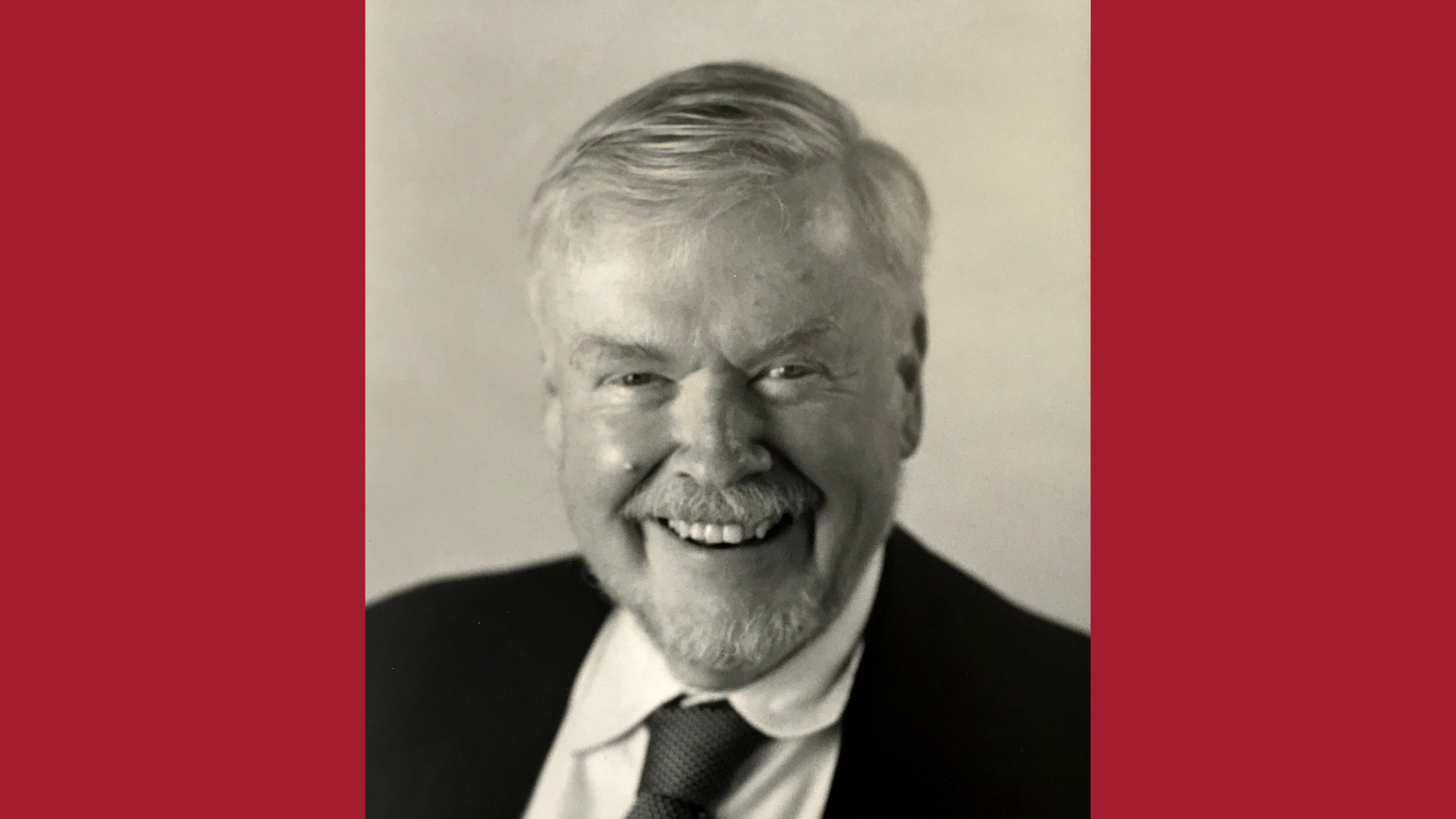
Victor K. McElheny, a science journalist and author who co-founded the Knight Science Journalism Program at MIT, died on July 14, 2025, in Lexington, Massachusetts, after a brief illness. He was 89.
During his long and distinguished career, McElheny covered science and technology for leading publications including The Charlotte Observer, The Boston Globe, Science, and The New York Times, where he started one of the first technology columns in American newspapers. He reported on a wide range of topics including the Apollo lunar landing program, molecular biology, and the sequencing of the human genome.
A lifelong love of science and journalism
Born in Boston in 1935, McElheny grew up in Poughkeepsie, New York. He attended Phillips Exeter Academy, where he wrote for the school newspaper, The Exonian, and later reported for The Harvard Crimson as a Harvard student.
After graduating from college in 1957, he worked briefly at the Florence (S.C.) Morning News, before joining The Charlotte Observer as a reporter. He returned to Harvard as the Arthur D. Little Fellow in the Nieman Class of 1963, concentrating on science and its impact.
Following his Nieman fellowship, McElheny worked as a writer at the Swedish-American News Exchange in Stockholm before becoming the European correspondent for Science, based in London. In 1966, he returned to the United States, where he joined The Boston Globe and served as a science editor until 1972. He also contributed to Time magazine, The Technology Review, The Washington Post, and WGBH-TV.
While working as a consultant for the Polaroid Corporation from 1972 to1973, he met his wife, Ruth Sullivan, a writer and editor. Years later, in 1998, he wrote his first book, “Insisting on the Impossible, the Life of Edwin Land, Inventor of Instant Photography,” about the American inventor who founded Polaroid.
In 1973, McElheny joined The New York Times as a technology reporter before serving as the inaugural director of the Banbury Center at the Cold Spring Harbor Laboratory in New York from 1978 to 1982.
An incubator for science journalists
In 1983, together with MIT President Paul Gray and then-director of MIT’s Science, Technology and Society Program, Carl Kaysen, McElheny co-founded the Knight Science Journalism Program at MIT and served as its director until 1998. He remained actively involved with the program and was a research affiliate in MIT’s Program on Science, Technology and Society, where he lectured on science topics.
In a 2013 Nieman Reports article, McElheny credited his own Nieman experience as a guiding force in the creation of the Knight Science Journalism Program:
“My Nieman year was a stunning combination of contact with leading newsmakers, including [U.S. Attorney General] Bobby Kennedy reviewing the Cuban Missile Crisis, and the intense competition of first-class fellow professionals. The meaning of a career in journalism was raised to a new level. In frequent conversations with [Nieman Curator] Louis and [his wife] Tottie Lyons, I learned how a very special program of professional energizing could be made to work in practice and how it could be integral to a university’s intellectual mission.
So in 1981, when the Massachusetts Institute of Technology (MIT) approached me to start a program for science journalists modeled on the Nieman Fellowship, I knew exactly what to do.
At MIT in the 1980s, as at Harvard in the 1930s, the aim was to tap the resources of a great university to reinforce the knowledge, skills, reflectiveness, confidence and ambition of newspeople determined to deliver facts straight to the public, to educate the real rulers in a democracy. My Nieman experience gave me crucial encouragement in enlisting science journalists from across the world to spend a year at MIT, colliding with each other and with MIT’s amazing faculty (and many at Harvard, too) to sharpen their ability to translate into popular terms the science that shapes so much of our existence.”
McElheny worked diligently to raise long-term funding for the program and in 1987, obtained a multimillion-dollar grant from the Knight Foundation for an endowment that continues to support the fellowship. Originally known as the Vannevar Bush Science Journalism Fellowship Program and later renamed the Knight Science Journalism Program, the fellowship has benefited more than 400 leading science journalists from around the world.
McElheny and his wife Ruth contributed over several years to an endowment for an annual KSJ prize, now named the Victor K. McElheny Award, which honors outstanding local and regional journalism covering issues in science, public health, technology, or the environment.
In addition to his biography of Edwin Land, McElheny wrote two other books: the 2003 biography “Watson and DNA: Making a Scientific Revolution,” and “Drawing the Map of Life: Inside the Human Genome Project,” published in 2010. McElheny began covering stories about DNA even before he first met James Watson during his Nieman year at Harvard.
In a 2022 email to Nieman staff he wrote: “The related topic most on my mind these days is the immense value the year at Harvard had in building confidence for the long haul, and reinforcing a sense of just how important journalism is to the vigor of democracy, while sharpening awareness of specific and enduring underlying themes.”
McElheny’s wife, Ruth, died on April 12, 2025. He is survived by his brothers, Kenneth McElheny and Steven McElheny, and Steven’s wife Karen Sexton; his sister, Robin McElheny, and her husband Alex Griswold; and numerous nephews and nieces.
The McElheny family invites those wishing to make a memorial gift in his honor to donate to the Victor K. McElheny Award Fund.
Additional information:
- The MIT Knight Science Journalism Fellowship program
- Nieman at 80: Reporting on the H-bomb: How one reporter’s question shaped a career in science journalism
- Nieman at 75: Science reporting is more important than ever: The genesis of the MIT Knight Science Journalism Fellowship
- LinkedIn page
- Wikipedia profile
- Nieman Class of 1963 photo