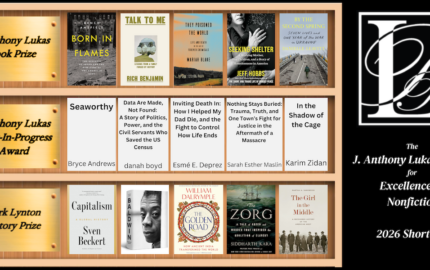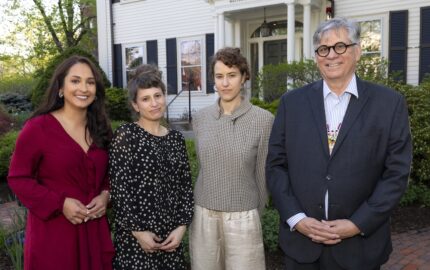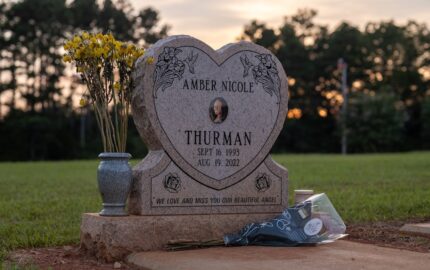
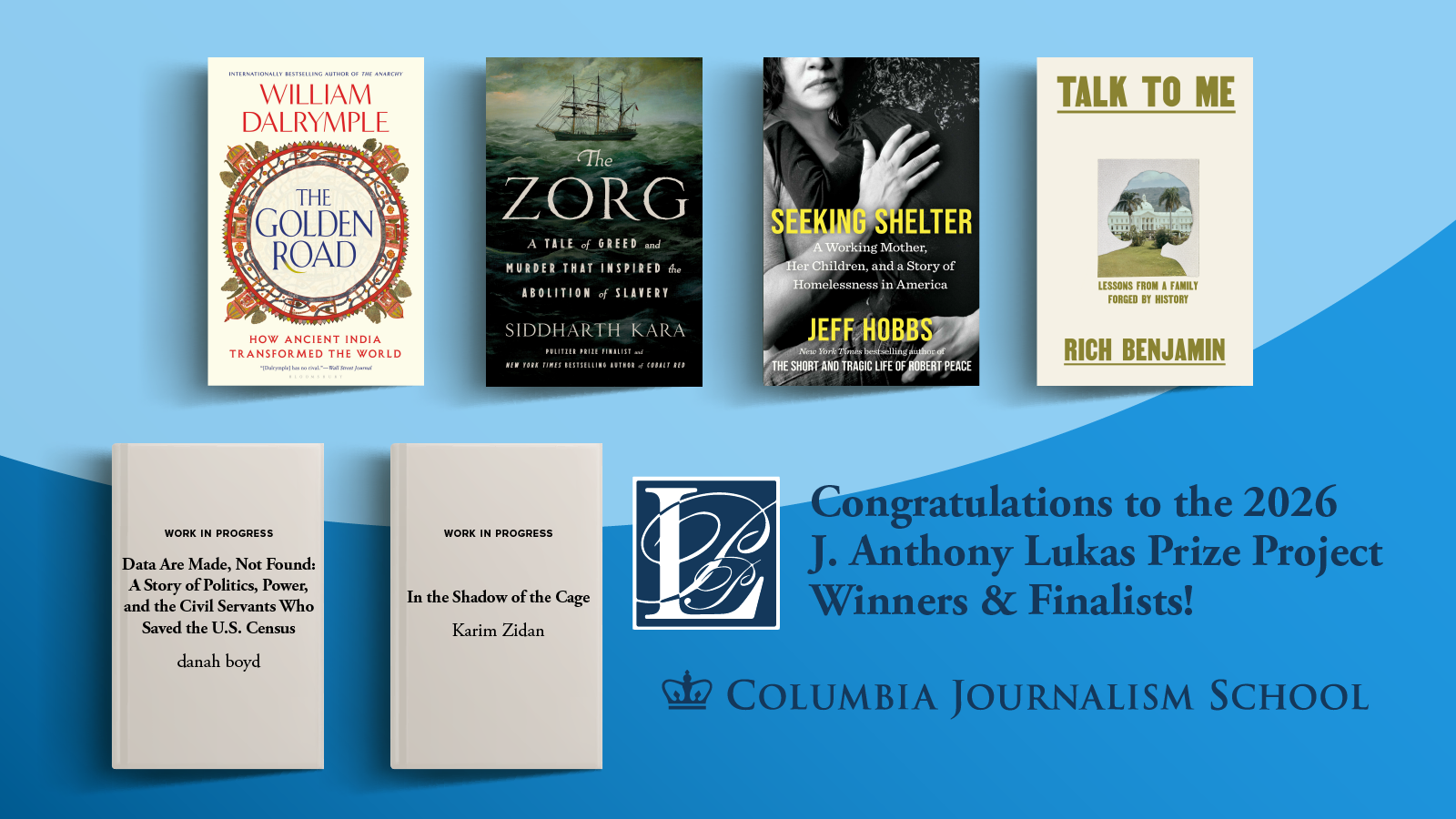
Columbia Journalism School and the Nieman Foundation for Journalism at Harvard University are pleased to announce the four winners and two finalists of the 2026 J. Anthony Lukas Prize Project. The Lukas Prizes, established in 1998 and consisting of the J. Anthony Lukas Work-in-Progress Awards, the J. Anthony Lukas Book Prize, and the Mark Lynton History Prize, honor the best in American nonfiction book writing.
The winners were chosen from 473 entries and selected by three teams of judges from across journalism, publishing, and academia.
Winners and Finalists of the 2026 Lukas Prizes:
J. Anthony Lukas Work-in-Progress Award Winners
- danah boyd, Data Are Made, Not Found: A Story of Politics, Power, and the Civil Servants Who Saved the U.S. Census (University of Chicago Press)
- Karim Zidan, In the Shadow of the Cage (One Signal)
J. Anthony Lukas Book Prize
- Winner: Jeff Hobbs, Seeking Shelter: A Working Mother, Her Children, and a Story of Homelessness in America (Scribner)
- Finalist: Rich Benjamin, Talk to Me: Lessons from a Family Forged by History (Pantheon)
Mark Lynton History Prize
- Winner: William Dalrymple, The Golden Road: How Ancient India Transformed the World (Bloomsbury)
- Finalist: Siddharth Kara, The Zorg: A Tale of Greed and Murder That Inspired the Abolition of Slavery (St. Martin’s Press)
About the prizes:
Established in 1998, the Lukas Prize Project honors the best in American nonfiction book writing. Co-administered by the Columbia University Graduate School of Journalism and the Nieman Foundation for Journalism at Harvard, and sponsored by the family of the late Mark Lynton, a historian and senior executive at the firm Hunter Douglas in the Netherlands, the Lukas Prize Project presents four awards annually in three categories.
J. Anthony Lukas Work-in-Progress Awards (two $25,000 prizes):
The J. Anthony Lukas Work-in-Progress Awards are given annually to aid in the completion of significant works of nonfiction on American topics of political or social concern. Judges: Krithika Varagur (chair), Walter Harrington, and Erroll McDonald.
Winner: danah boyd, Data Are Made, Not Found: A Story of Politics, Power, and the Civil Servants Who Saved the U.S. Census (University of Chicago Press)
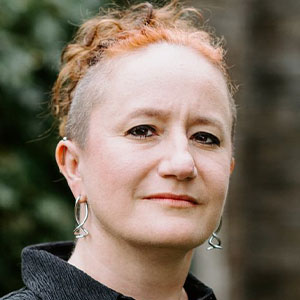
Photo by Devin Flores
danah boyd is the Geri Gay Professor of Communication at Cornell University, where she works on topics at the intersection of technology and society. She is also the founder of the research institute Data & Society and the author of It’s Complicated: The Social Lives of Networked Teens.
By many measures, the U.S. decadal census is the government’s largest non-wartime operation. The 2020 census required more than a decade of planning and data processing to count each of 331,449,281 residents once—and only once—and in the right place. In the United States, census data anchor American democracy and, consequently, political forces configure the making of census data. Data Are Made, Not Found explores what it took for the Census Bureau to compile census data in 2020—amidst a global pandemic and natural disasters, while navigating political forces that constrained the budget, micromanaged the schedule, and attacked the methods that statisticians used. Despite the challenges in 2020, civil servants managed to successfully produce high-quality data that was used to apportion Congress, redraw Congressional districts, and distribute federal funding. However, each move in what boyd calls “Jenga politics” has made the census infrastructure more precarious. What will it take for bureaucrats to continue pulling off “the impossible”?
Judges’ citation: Data Are Made, Not Found will be a revelatory work of ethnography and narrative nonfiction that arrives at an urgent moment for American democracy. With unprecedented access to the U.S. Census Bureau’s internal meetings and civil servants, eminent technology researcher danah boyd will tell the story of the 2020 census, battered by a global pandemic and systematic political interference, as a parable for the fragility of the administrative state itself. The illusion of statistical objectivity, as boyd shows, is precisely what makes the Bureau vulnerable to those who would exploit it—leading to her titular insight that census data are made rather than found. Her notion of “Jenga politics,” through which a range of actors, often believing themselves to be helpful, collectively weaken democratic institutions by pulling out one plank at a time, offers a new framework for understanding institutional weakness, as well as avenues for shoring it up. Boyd brings to this project both scholarly rigor and strong storytelling instincts, humanizing the unsung civil servants who pulled off something close to a miracle under extraordinary duress. The Lukas Prize will support boyd as she completes the book and carries its arguments into the public sphere.
Winner: Karim Zidan, In the Shadow of the Cage (One Signal)
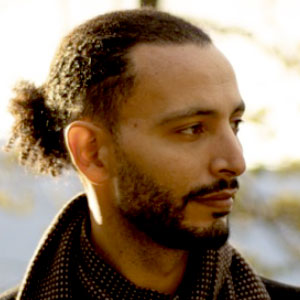
Photo by Jay Lanns
Karim Zidan is an investigative journalist who has reported on the intersection of sports and politics for more than a decade. He is a regular contributor to The Guardian, and his work has been featured in The New York Times and Foreign Policy, among other outlets. His reporting on authoritarian sports strategies has received numerous award nominations and was the basis of an award-winning HBO documentary. He also runs Sports Politika, a media venture dedicated to his beat.
In the Shadow of the Cage tells the story of how political operators have captured mixed martial arts and turned it into a tool to radicalize young people toward a mindset that centers individualism and survival of the fittest while shirking empathy. Zidan began reporting on this phenomenon in Eastern Europe and continues exploring the underbelly of MMA in the Middle East and the United States, documenting its evolution into the ground zero of a new wave of right-wing, hypermasculine counterculture.
Judges’ citation: In the Shadow of the Cage will be a vital and stylish work of reportage and memoir about mixed martial arts (MMA) and the Ultimate Fighting Championship (UFC), especially in the age of Trump, whose alliance with UFC has helped mainstream, in Zidan’s words, a ”brand of aggressive nationalism and anti-establishment rhetoric that has since bled into broader American politics.” Zidan’s work is an indispensable guide to a sport and culture not well known outside its fanbase, but which has, as his journalism has shown, links to neo-Nazis, Gulf autocrats, gendered propaganda, and much more. With deep sourcing and narrative command, Zidan’s story traces UFC from its outlaw origins—once denounced as “human cockfighting” by Senator John McCain—to its emergence as a cultural arm of the MAGA movement, with its politics of dominance, spectacle, and grievance. He has a gift for illustrating these sweeping themes with intimate human stories, from a former UFC champion turned QAnon-peddling city councilman to the fighters who cheered Trump even while their own labor rights were gutted. Zidan, an award-winning, Cairo-born journalist, has reported on this beat for over a decade, despite bans, death threats, and the hostility of powerful institutions—demonstrating the same defiant persistence as the fighters he covers. The Lukas Prize will help him complete his ambitious reporting, which spans Russia, the Middle East, and the United States, all the way to the White House.
J. Anthony Lukas Book Prize ($10,000):
The J. Anthony Lukas Book Prize recognizes superb examples of book-length nonfiction writing that exemplify the literary grace, commitment to serious research, and original reporting that characterized the distinguished work of the award’s namesake, J. Anthony Lukas. Books must be on a topic of American political or social concern published between January 1 and December 31, 2025. Judges: Héctor Tobar (chair), Carol Anderson, Geoff Shandler, and Anna Louie Sussman.
Winner: Jeff Hobbs, Seeking Shelter: A Working Mother, Her Children, and a Story of Homelessness in America (Scribner)
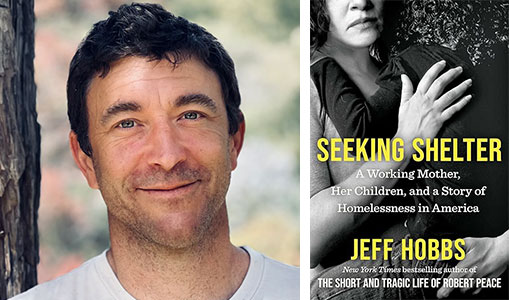
Photo by Lucy Hobbs
Jeff Hobbs is the New York Times bestselling author of The Short and Tragic Life of Robert Peace, which won the Los Angeles Times Book Prize, was a finalist for the PEN/Jacqueline Bograd Weld Award for Biography and the Carnegie Medal in Nonfiction, and was made into the 2024 film “Rob Peace.” He is also the author of Show Them You’re Good and Children of the State. He lives in Los Angeles with his family.
In 2018, poverty and domestic violence cast Evelyn and her children into the urban wilderness of Los Angeles, where she avoided the family crisis network that offered no clear pathway for her children to remain together and in a decent school. For the next five years, Evelyn worked full-time as a waitress—yet remained unable to afford legitimate housing or qualify for government aid. All the while, she delivered her children to school every day and strove to provide them with loving memories and college aspirations. Eventually, Evelyn encountered Wendi, a recently trained social worker who, decades earlier, survived her own relationship trauma and housing crisis. Evelyn became one of Wendi’s first clients, and the relationship transformed them both. Told from the perspectives of Evelyn, Wendi, and Evelyn’s teenage son Orlando, Seeking Shelter is a vivid exploration of homelessness, poverty, and education in America—a must-read for anyone interested in understanding not just social inequality and economic disparity in our society, but also the power of a mother’s love and vision for her kids.
Judges’ citation: Seeking Shelter is a deeply moving portrait of a family on a quest for a place to call home. With novelistic detail and boundless empathy for his subjects, Hobbs reconstructs the day-by-day drama of a working mother trying her best to protect and educate her children; her efforts to give her family the hope of upward mobility inadvertently send them spiraling into homelessness. Seeking Shelter shatters one myth about this country’s housing crisis after another, revealing the bureaucratic, economic, and social catastrophes that have created a new caste of unhoused people. But much more than that, Seeking Shelter succeeds as the heart-wrenching story of one California family. Rarely has a writer of nonfiction so deeply entered the emotional and domestic world of his subjects. Hobbs shows us what homelessness looks like from the point of view of a mother, an adolescent, and a young child, each person’s humanity portrayed in nuanced complexity. Seeking Shelter is a poignant and life-affirming tribute to the love, strength, and courage possessed by so many American working families.
Finalist: Rich Benjamin, Talk to Me: Lessons from a Family Forged by History (Pantheon)
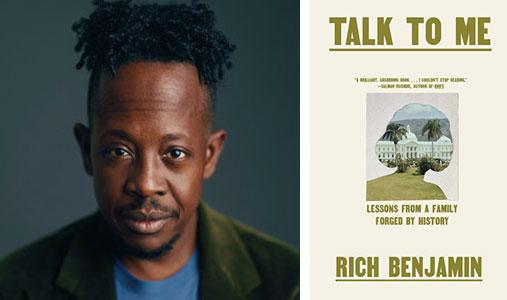
Photo by Stephen K. Mack
Rich Benjamin is a cultural anthropologist whose writing has appeared in The New Yorker, The New York Review of Books, and The New York Times. He is also a sought-after lecturer and a public-facing scholar often interviewed in international media, including on MS NOW, NPR, CNN, and the BBC. His work has received support from the Dorothy and Lewis B. Cullman Center for Scholars and Writers, the Effron Center at Princeton University, MacDowell, Civitella, and the Harvard-Radcliffe Institute for Advanced Study. He is the author of Searching for Whitopia: An Improbable Journey to the Heart of White America.
Talk to Me is an account of the coup that ended Benjamin’s grandfather’s presidency of Haiti, the secrecy that shrouded the wound within his family, and his urgent efforts to know his mother despite the past. It also provides a bold, pugnacious portrait of America—of the human cost of the country’s hostilities abroad, the experience of migrants on these shores, and how the indelible ties of family endure through triumph and loss from generation to generation.
Judges’ citation: “When you’ve been to hell and back, ... nothing can ever destroy you.” Those ominous words from Benjamin’s mother, a Haitian refugee and revered U.N. official, haunt virtually every page of Talk to Me. Sometimes quietly, sometimes vividly, the specter is always there. In this powerful saga, Benjamin sets out to discover what could make such a strong, smart, accomplished woman wake up screaming. The journey of discovery begins in her homeland of Haiti, and reveals the unfolding of his family’s rivalries, loves, and wounds. His grandfather, who became president of Haiti after years of political maneuvering, is central to this story about the costs of ambition, the intoxication of power, and the consequences of betrayal. The toll of these realities emerges anew while the family is in exile in the United States, fighting to survive in a land undergoing the slow dismantling of Jim Crow, the perils of stagflation, and the devastation of the crack epidemic and trickle-down economics. Through it all, Benjamin has skillfully woven an engrossing tale that is simultaneously intimate and global, harrowing and empowering.
Mark Lynton History Prize ($10,000):
The Mark Lynton History Prize is awarded to the book-length work of narrative history, on any subject, that best combines intellectual distinction with felicity of expression. Books must have been published between January 1 and December 31, 2025. Judges: Scott Reynolds Nelson (chair), Geraldo Cadava, Ann Fabian, and Manisha Sinha.
Winner: William Dalrymple, The Golden Road: How Ancient India Transformed the World (Bloomsbury)
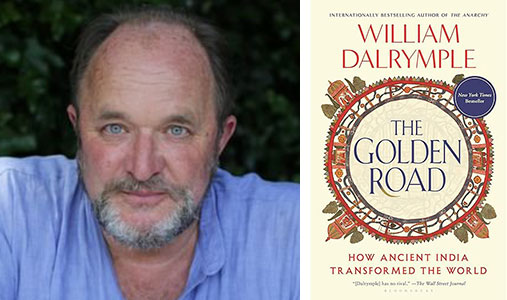
Photo by Debbie Mitra Singh
William Dalrymple is the prize-winning author of numerous books, including White Mughals, The Last Mughal, and Return of a King. A frequent broadcaster, he has written and presented three television series, one of which won the Grierson Award for Best Documentary Series at BAFTA. He writes regularly for The New York Review of Books, The New Yorker, and The Guardian. Dalrymple lives with his wife and three children on a goat farm outside of Delhi.
For a millennium and a half, India was a confident exporter of its culture, creating around it a vast empire of ideas. Indian art, religions, technology, astronomy, music, dance, literature, mathematics, and mythology blazed a trail across the world that stretched from the Red Sea to the Pacific. Dalrymple draws from a lifetime of scholarship to highlight India’s oft-forgotten position as the heart of ancient Eurasia. From the largest Hindu temple in the world at Angkor Wat to Buddhism in Japan, from the trade that helped fund the Roman Empire to the creation of the numerals we use today, India transformed the culture and technology of the ancient world—and our world today as we know it. Yet somehow this vast Indosphere has never had a name, until now: The Golden Road. Dalrymple transforms our understanding of how the ancient world was built and what debt we in modern times owe to India’s intellectual, spiritual, and commercial contributions.
Judges’ citation: Dalrymple’s The Golden Road is a perspective-shifting book that places India at the center of ancient Asian history. After Dalrymple, it will be difficult to discuss the Silk Road connecting China and the West without also considering the importance of the Golden Road, which spread India’s influence west and east through trade, religion, and math. Jewelry went from India to Rome and lamps went from Rome to India along the Golden Road. Buddhism left its indelible imprint in Sri Lanka, Tibet, China, Korea, and Japan. India gave us the mathematical concept of zero and the form of the numbers we use today. The Golden Road is not about a dead past, but one that lives on in our daily rituals, science, and monuments. Perhaps most impressively, Dalrymple’s prose makes his book about a faraway time and place a page-turner that’s hard to put down.
Finalist: Siddharth Kara, The Zorg: A Tale of Greed and Murder That Inspired the Abolition of Slavery (St. Martin’s Press)
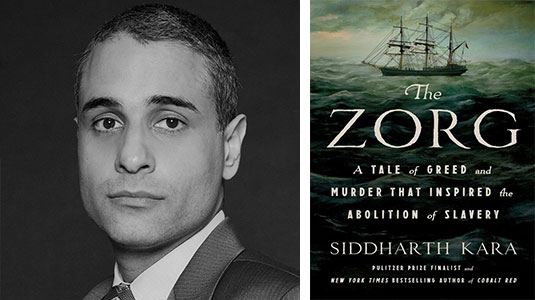
Photo by Lynn Savarese
Siddharth Kara is an author, researcher, and activist focused on modern slavery. He has written several books and reports on slavery and child labor, including The New York Times bestseller and Pulitzer Prize finalist, Cobalt Red. He divides his time between Los Angeles and London.
In October 1780, a slave ship set sail from the Netherlands, bound for Africa’s Windward and Gold Coasts. When a series of unpredictable weather events and navigational errors led to the Zorg sailing off course and running low on supplies, the ship’s captain threw more than a hundred slaves overboard. The ship’s owners then claimed their loss on insurance, a first for slaves who had not been killed due to insurrection or died of natural causes. The insurers refused to pay due to the higher than usual mortality rate of the slaves on board, leading to a trial that initially found in their favor. Thanks to the outrage of one man present in court that day, a retrial was held. For the first time, human rights and morality entered the discourse on slavery in a courtroom case that boiled down to a simple question: Were the Africans on board people or cargo? The Zorg reveals how the case catapulted the anti-slavery movement from a minor evangelical cause to one of the most consequential moral campaigns in history and sparked the abolitionist movement in both England and the United States.
Judges’ citation: Kara has written an extraordinary account of the slave ship “Zorg,” an ill-fated English vessel remembered for the heartless murder of dozens of the men and women whom enslavers intended to bring to market in Jamaica. Bad weather and poor seamanship left the crew believing they were woefully short of water. And so, they began to toss captive Africans overboard, claiming they sacrificed few to save many. The waters of the Caribbean might have swallowed the story, but slave merchants, with their greedy eyes on the bottom line, sought insurance reimbursement for lost cargo. Kara follows the story from Liverpool docks to the coast of Africa, to the Caribbean and into London courtrooms. When evidence emerged that rain had replenished the water casks, the slave traders’ case began to fall apart. With meticulous research and beautifully restrained prose, Kara crafts a powerful story that captures the cruelty, inhumanity, avarice, and moral hypocrisy of all those who profited from this traffic in men, women, and children. The case also stirred the conscience of a handful of activists and helped launch the campaign to abolish the British slave trade.
About Columbia Journalism School
For more than a century, Columbia Journalism School has been preparing journalists in programs that stress academic rigor, ethics, journalistic inquiry, and professional practice. Founded with a gift from Joseph Pulitzer, the school opened its doors in 1912 and offers a Master of Science, Master of Arts, a joint Master of Science degree in Computer Science and Journalism, and Doctor of Philosophy in Communications. It houses the Columbia Journalism Review, the Brown Institute for Media Innovation, and the Tow Center for Digital Journalism. The school also administers many of the leading journalism awards, including the Alfred I. duPont-Columbia University Awards, the Maria Moors Cabot Prizes, the John Chancellor Award, the John B. Oakes Award, the J. Anthony Lukas Prize Project, the Paul Tobenkin Memorial Award, and the Meyer “Mike” Berger Award.
About the Nieman Foundation for Journalism at Harvard
The Nieman Foundation for Journalism at Harvard educates leaders in journalism, promotes innovation, and elevates the standards of the profession. More than 1,700 journalists from 100 countries have been awarded Nieman Fellowships since 1938. The foundation also publishes Nieman Reports, an online magazine covering thought leadership in journalism; Nieman Journalism Lab, a website reporting on the future of news, innovation, and best practices in the digital media age; and Nieman Storyboard, a website showcasing exceptional narrative journalism and nonfiction storytelling.